
Lifting Technologies Blog: Lifting Equipment, Safety & Updates
- All
- Cantilever Man Baskets
- Working with Lifting Technologies
- Quality and Safety
- Rescue Man Baskets
- Crane-Suspended Man Baskets
- Forklift-Mounted Man Baskets
- Material Platforms
- Custom Capabilities
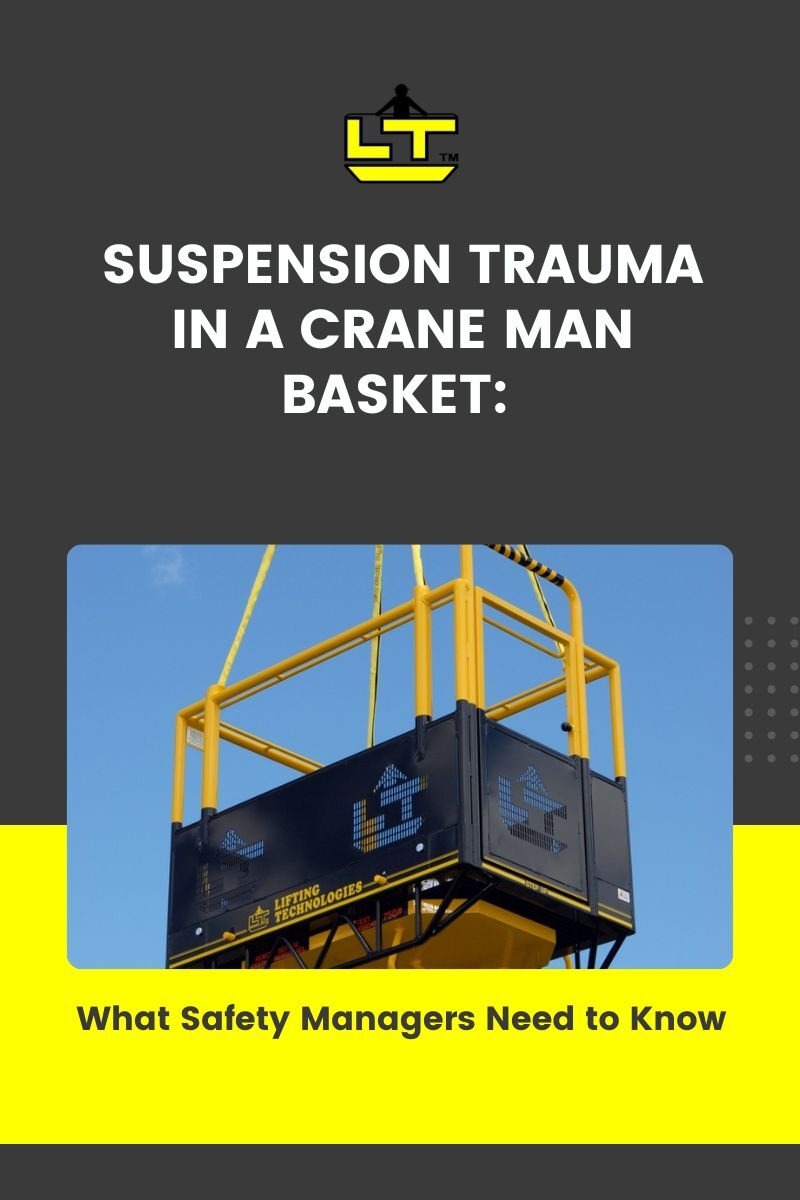
Suspension Trauma in a Crane Man Basket: What Safety Managers Need to Know
By Lifting Technologies |
A crane-suspended man basket is one of the more heavily engineered pieces of equipment on a job site: guardrails, an enclosed mid-section, a structural capacity of at least five times the maximum intended load, and a 125% proof test before anyone steps inside. It’s easy to read that list and assume a fall inside the […]
Read More 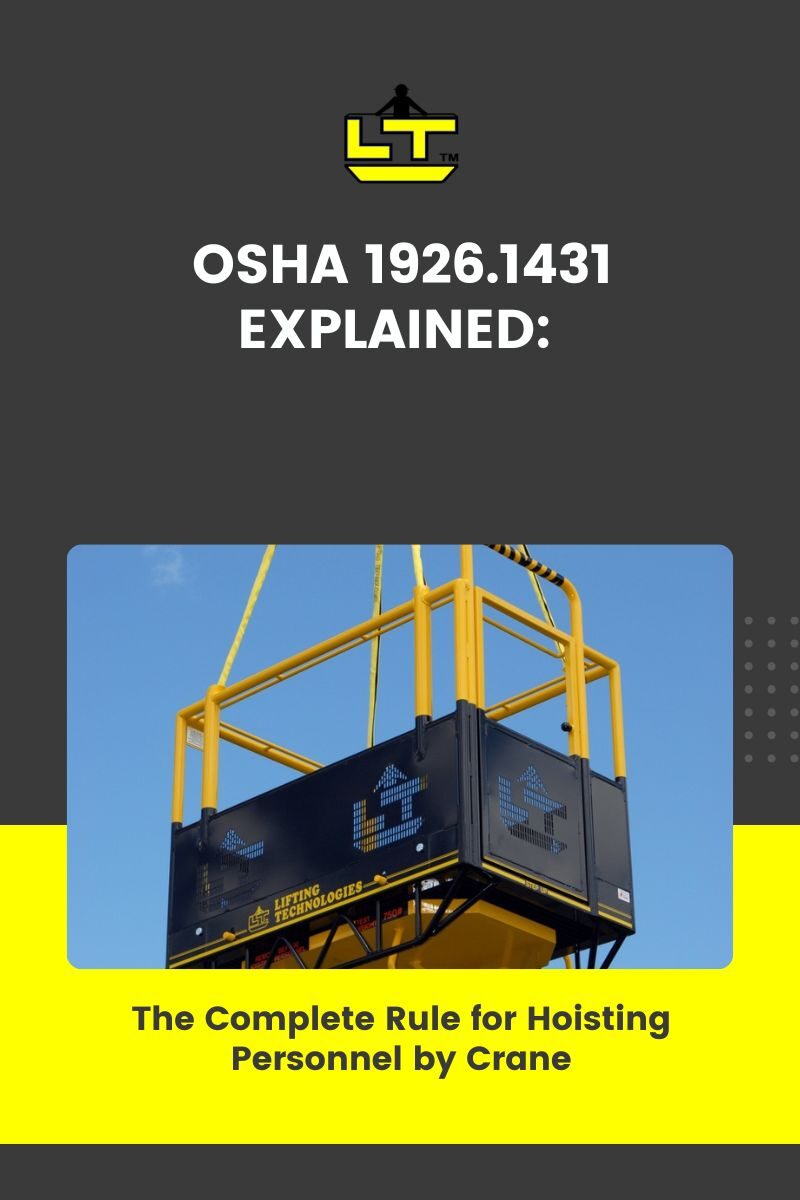
OSHA 1926.1431 Explained: The Complete Rule for Hoisting Personnel by Crane
By Lifting Technologies |
OSHA 29 CFR 1926.1431 is the rule that governs hoisting personnel by crane on construction sites. It sits inside Subpart CC, the broader standard for cranes and derricks, and it applies any time one or more workers are lifted in a personnel platform rather than reaching a work area by ladder, scaffold, or aerial lift. […]
Read More 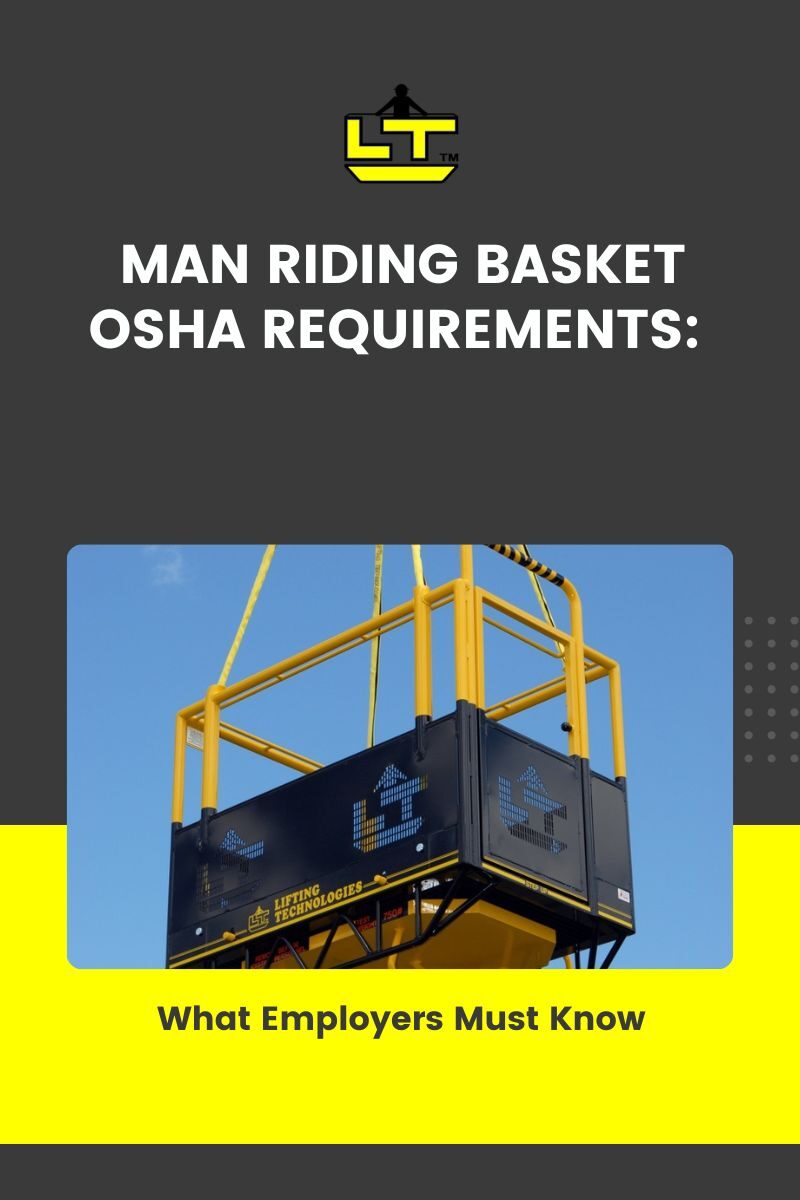
Man Riding Basket OSHA Requirements: What Employers Must Know
By Lifting Technologies |
Lifting personnel by crane is a well-established, well-regulated practice that gives crews access to work locations no other method can reach efficiently. OSHA 29 CFR 1926.1431 sets out the specific requirements employers need to meet to use a man riding basket safely and in compliance with federal regulation. This article summarizes what employers need to […]
Read More 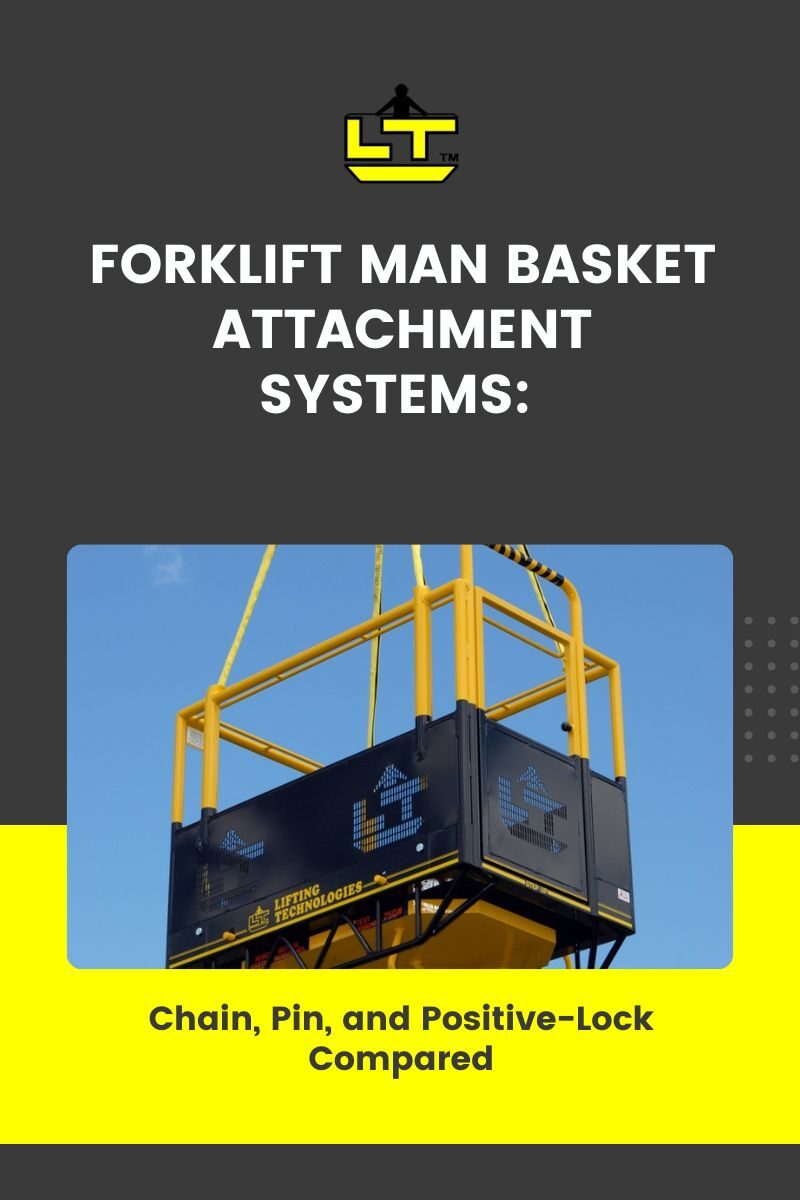
Forklift Man Basket Attachment Systems: Chain, Pin, and Positive-Lock Compared
By Lifting Technologies |
A forklift-mounted personnel platform is only as secure as the connection between the platform and the forks. The attachment system is what keeps the platform from shifting, sliding, or separating from the truck during lifting, travel, and work at elevation, and the differences between attachment types are not cosmetic. They directly affect how much the […]
Read More 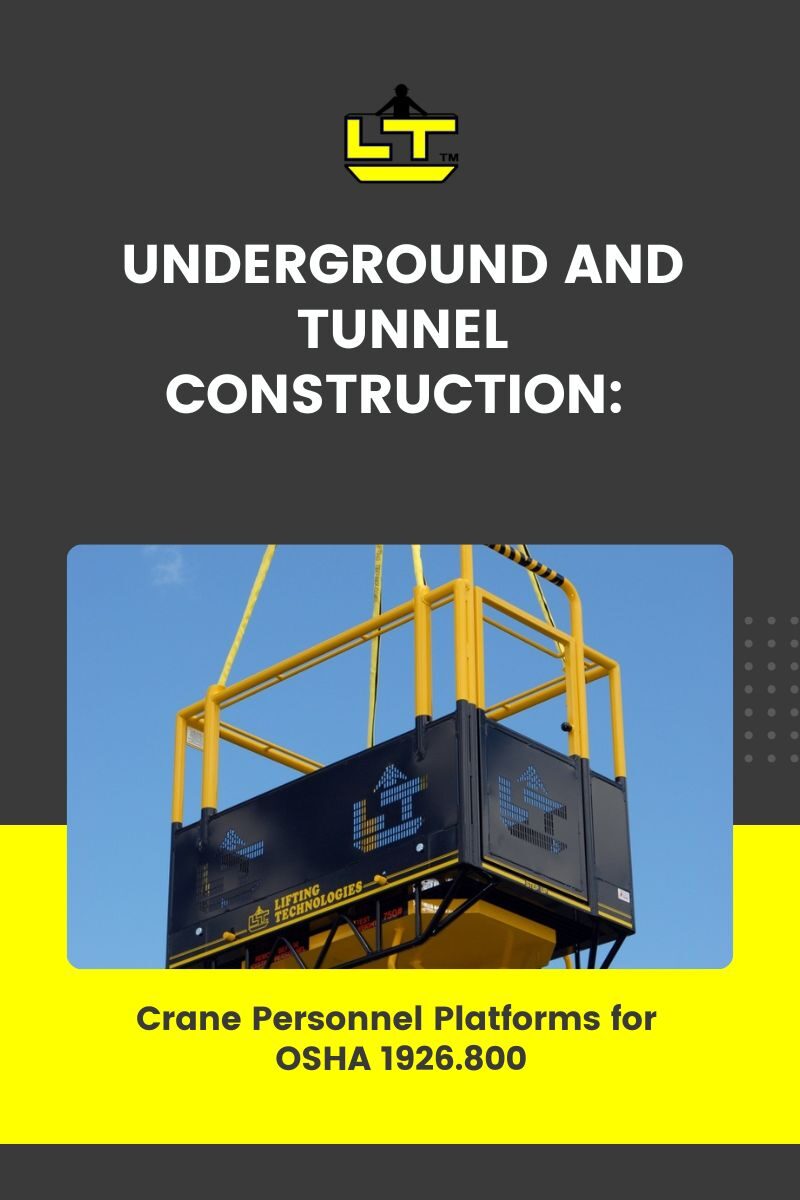
Underground and Tunnel Construction: Crane Personnel Platforms for OSHA 1926.800
By Lifting Technologies |
Shaft and tunnel construction puts crews in an environment that surface work doesn’t prepare equipment for. Access is vertical through a confined shaft, working space underground is tight, and the consequences of a falling object or an access failure are more severe than in open-air work, since there’s nowhere for a falling object to go […]
Read More 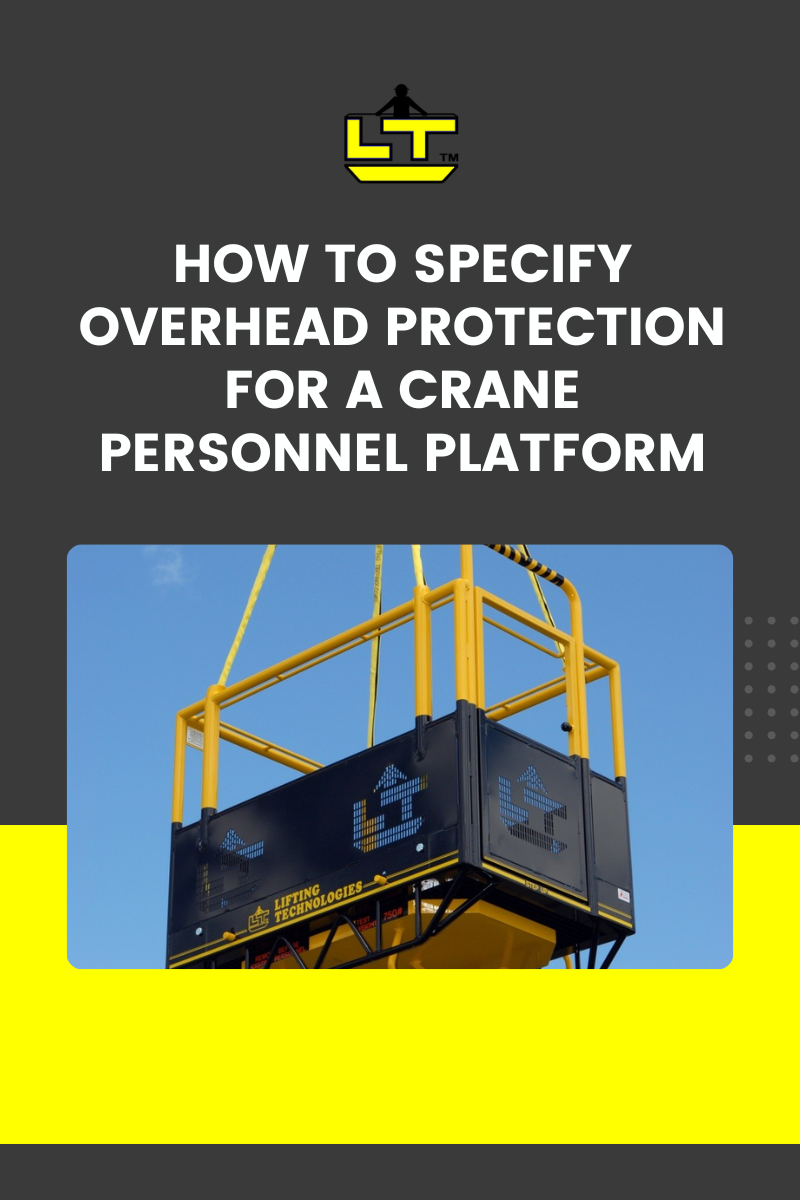
How to Specify Overhead Protection for a Crane Personnel Platform
By Lifting Technologies |
Overhead protection on a crane personnel platform does a critical job: it keeps falling objects off the crew. On a busy construction site, during a plant turnaround, or on a bridge structure where multiple trades are working at different elevations simultaneously, overhead protection is the difference between a crew that can focus on the work […]
Read More 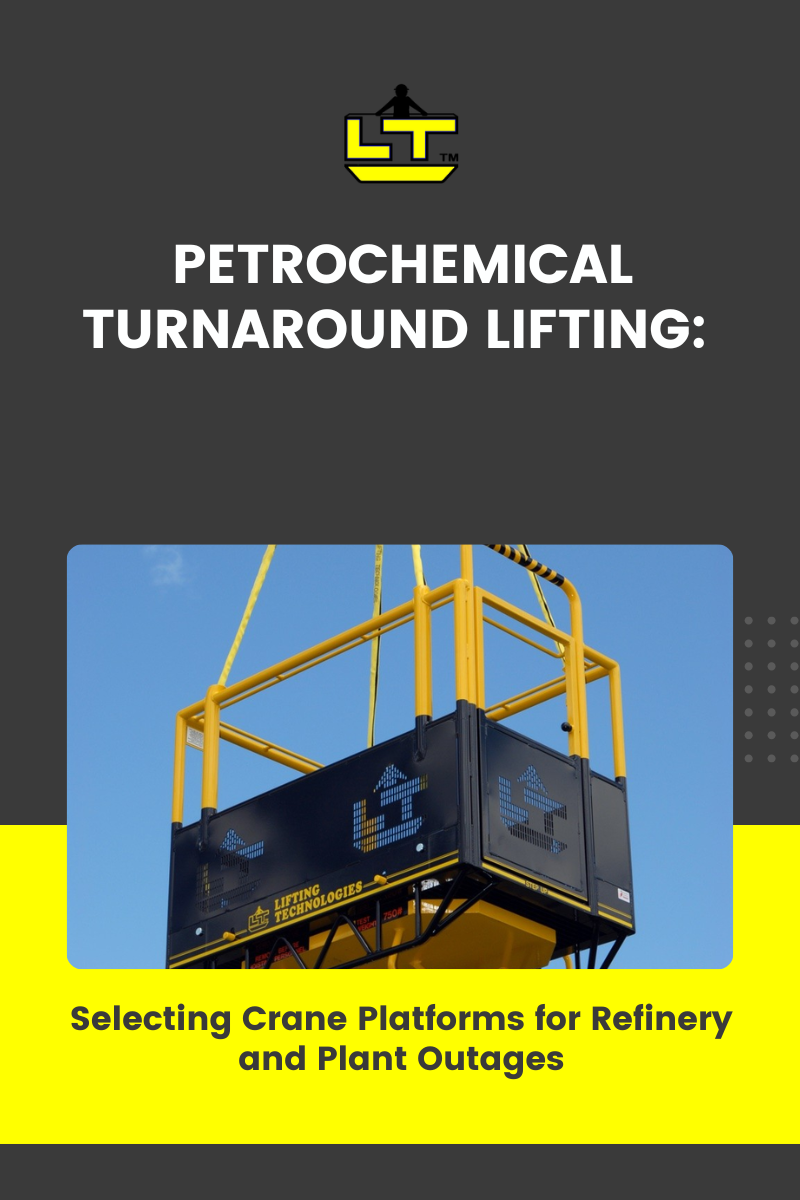
Petrochemical Turnaround Lifting: Selecting Crane Platforms for Refinery and Plant Outages
By Lifting Technologies |
A refinery or petrochemical plant turnaround compresses months of planning into a narrow window where every day of downtime has a direct cost. Multiple trades work simultaneously on the same equipment, crane picks happen around the clock, and the site safety program applies its full scrutiny to every piece of equipment that enters the work […]
Read More 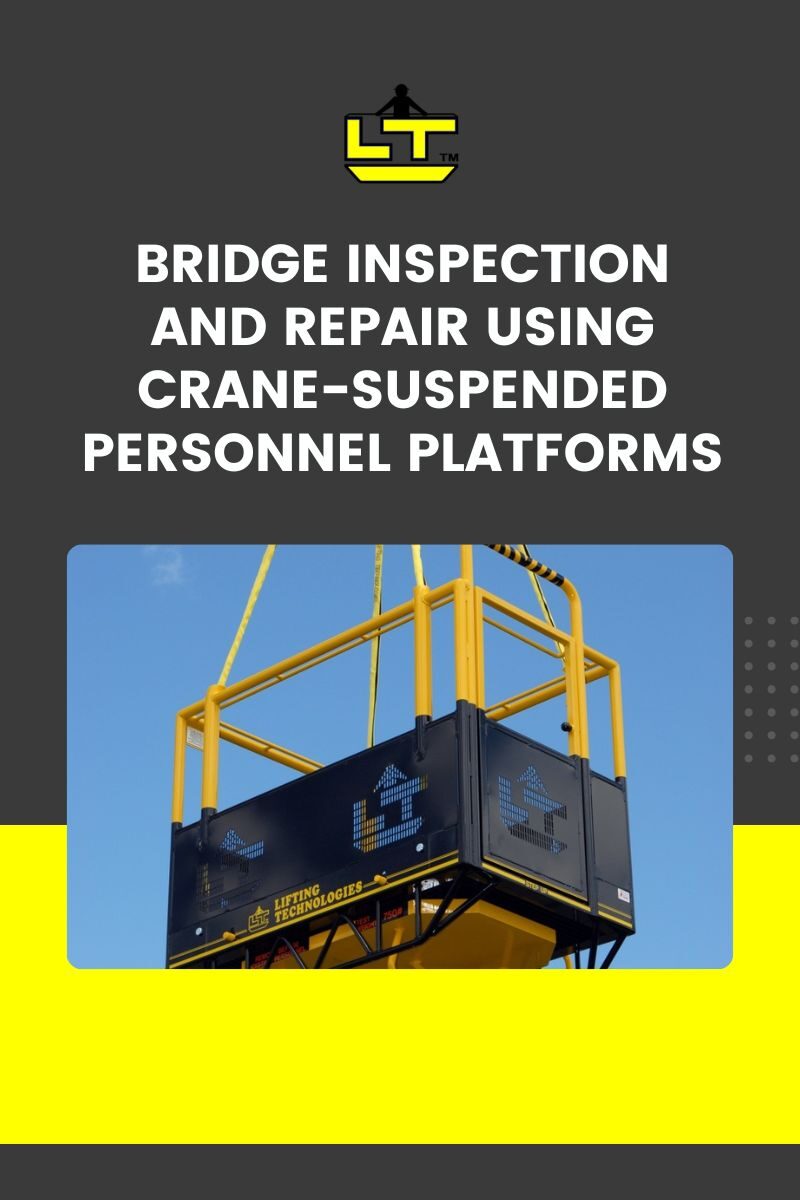
Bridge Inspection and Repair Using Crane-Suspended Personnel Platforms
By Lifting Technologies |
Bridge inspection and repair requires close-contact access to structural elements that are, by definition, elevated, offset, and in many cases over water or in canyon crossings where conventional access equipment can’t be positioned. Snooper trucks handle routine inspection on accessible structures. Scaffolding works where the geometry allows and the schedule permits. Neither covers every situation, […]
Read More 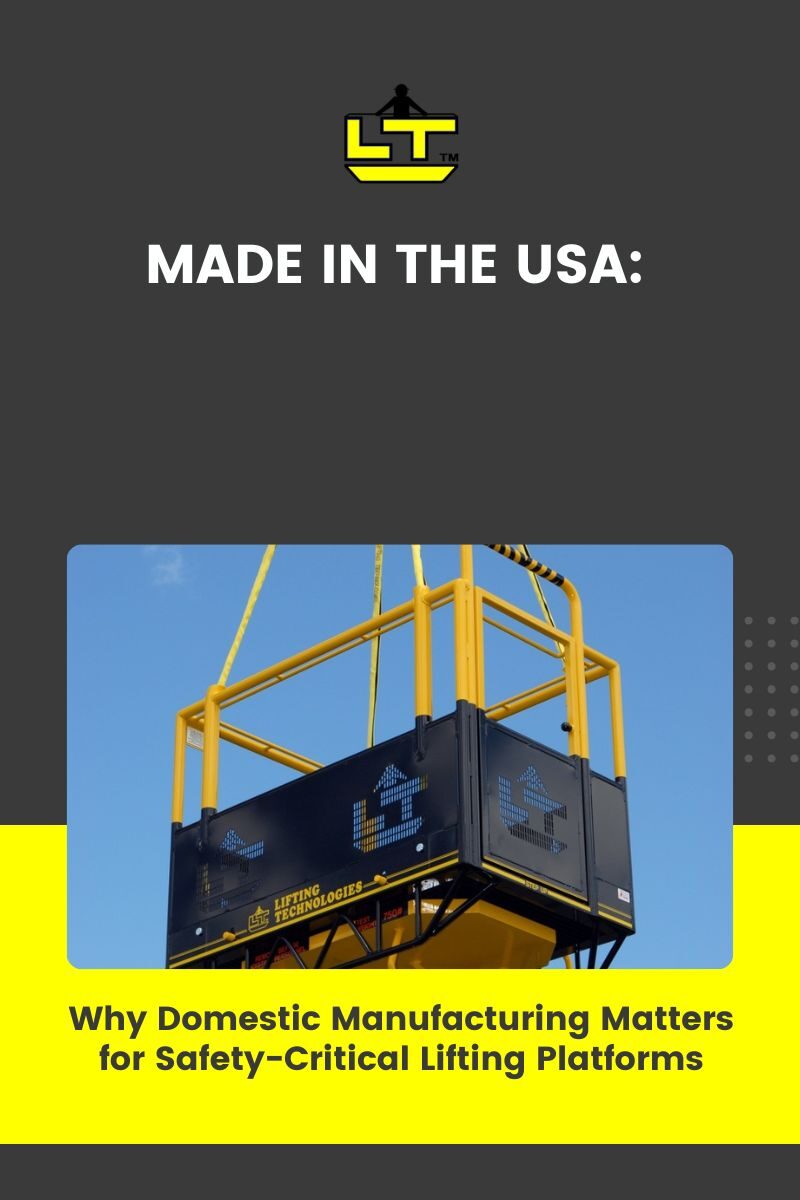
Made in the USA: Why Domestic Manufacturing Matters for Safety-Critical Lifting Platforms
By Lifting Technologies |
When procurement teams evaluate crane personnel platforms and material lifting baskets, price and delivery are the obvious variables. Country of manufacture is less often on the checklist, even though it affects supply chain reliability, documentation quality, regulatory compliance, and the practical ability to get questions answered when something needs to be resolved quickly. For safety-critical […]
Read More 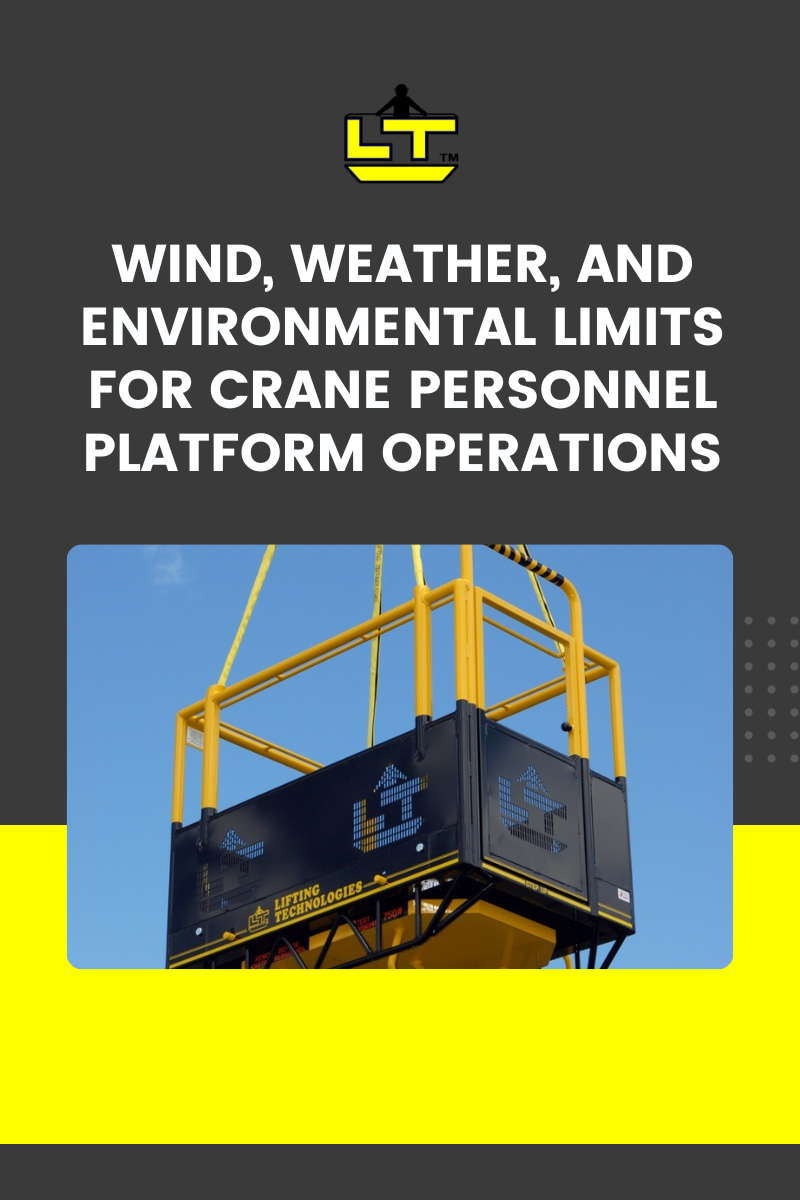
Wind, Weather, and Environmental Limits for Crane Personnel Platform Operations
By Lifting Technologies |
Crane personnel platform lifts are performed safely every day in a wide range of conditions. Wind, precipitation, temperature, and site-specific environmental factors all affect how those lifts are planned and managed, and understanding what OSHA requires, what good practice looks like beyond the regulatory baseline, and how platform design interacts with environmental conditions gives lift […]
Read More 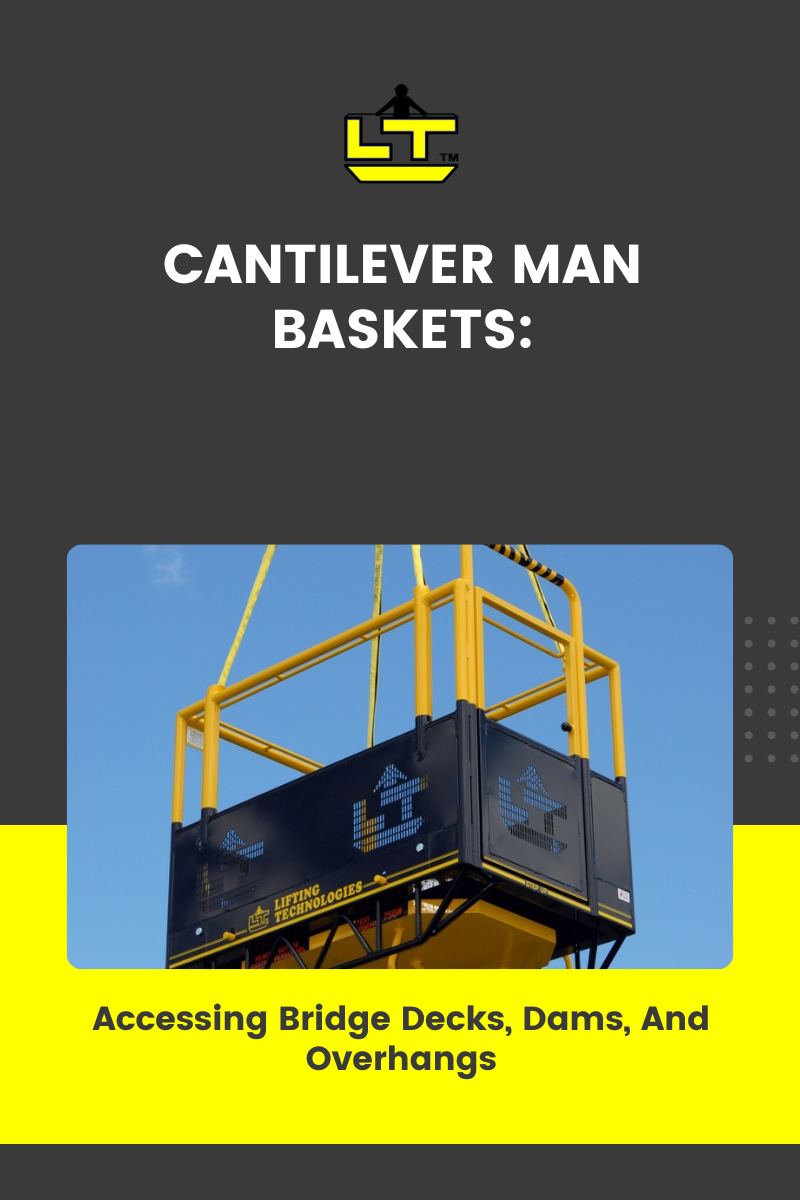
Cantilever Man Baskets: Accessing Bridge Decks, Dams, And Overhangs
By Lifting Technologies |
Some access challenges can’t be solved by positioning a crane directly over the work. Bridge support structures, dam spillway faces, retaining walls, and structural overhangs all share the same challenge: the work face is offset from where the crane can stand, and a standard crane personnel platform hung plumb from the hook doesn’t reach it. […]
Read More 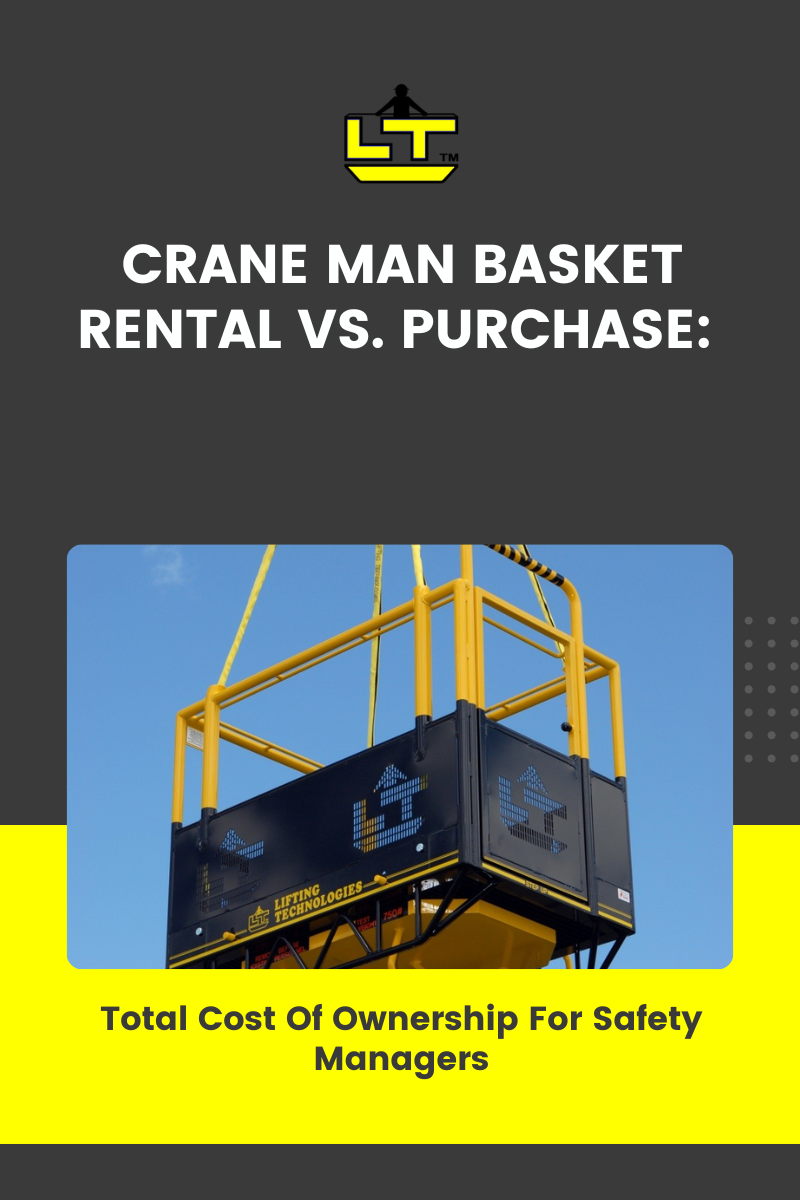
Crane Man Basket Rental Vs. Purchase: Total Cost Of Ownership For Safety Managers
By Lifting Technologies |
The rental vs. purchase decision for a crane man basket looks straightforward on the surface: rental has a lower upfront cost, purchase requires capital. Most safety managers and procurement teams stop there and default to rental for infrequent needs and purchase for high-frequency use. Total cost of ownership changes that picture. When you account for […]
Read More 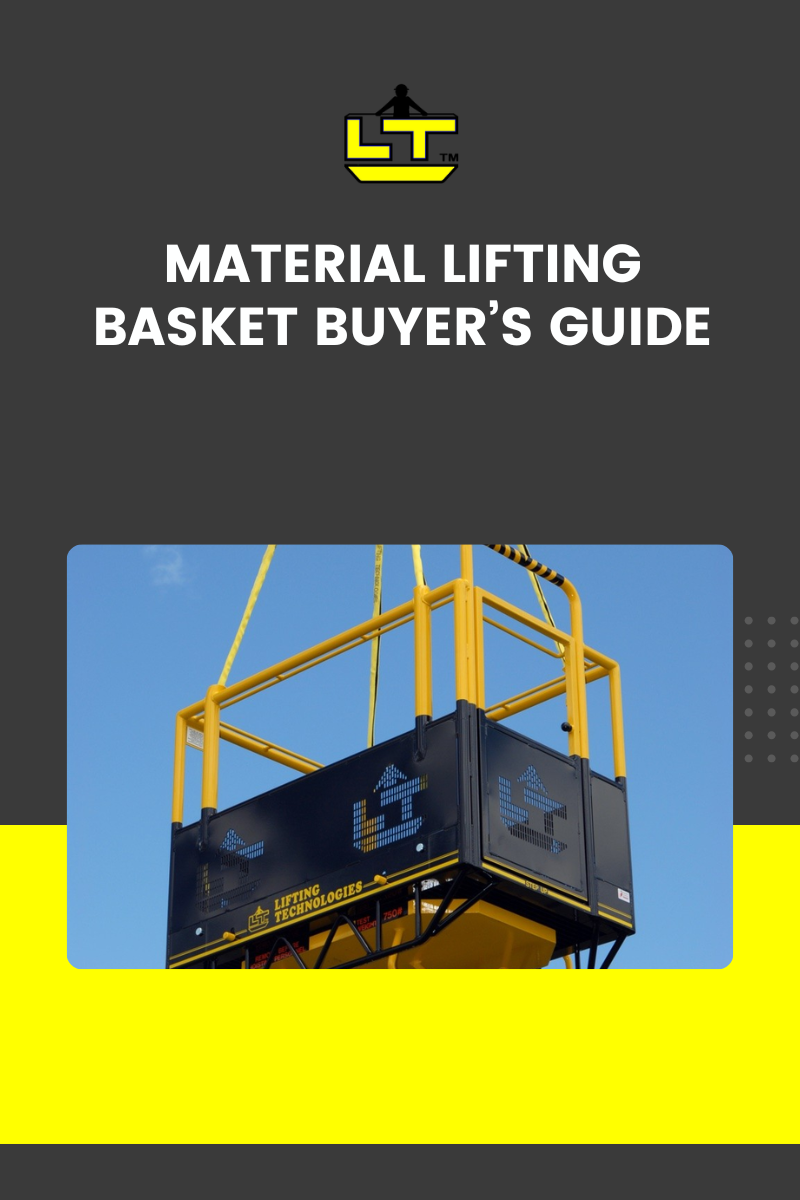
Material Lifting Basket Buyer’s Guide
By Lifting Technologies |
A material lifting basket that fits the job makes every lift cleaner: the load goes where it needs to go, the rigging connects without improvisation, the crane or forklift operates within its ratings, and the documentation is ready when the site safety program asks for it. Getting there requires matching several variables at once—rated capacity, […]
Read More 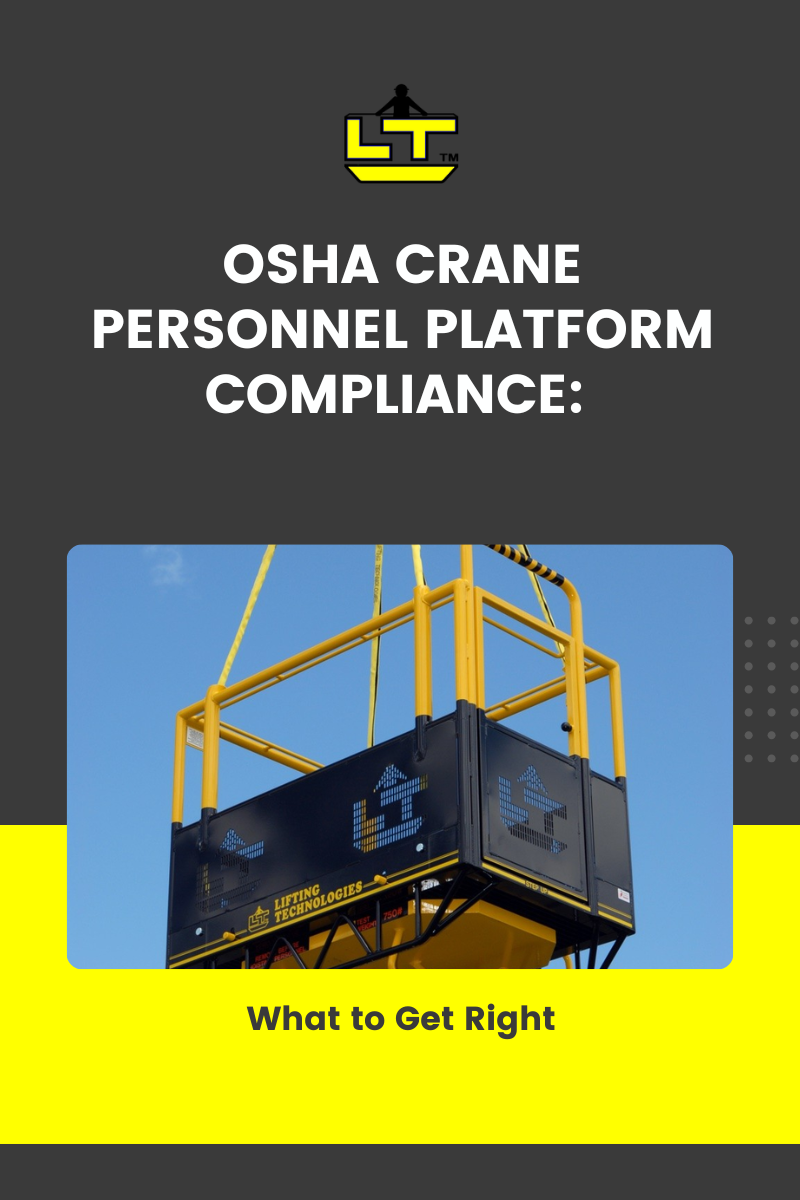
OSHA Crane Personnel Platform Compliance: What to Get Right
By Lifting Technologies |
Hoisting personnel by crane is one of the most carefully regulated operations in construction and heavy industry. When the equipment is right, the procedures are followed, and safety is the highest priority, crane personnel platform lifts are performed safely every day across a wide range of demanding applications. OSHA 29 CFR 1926.1431 gives employers a […]
Read More 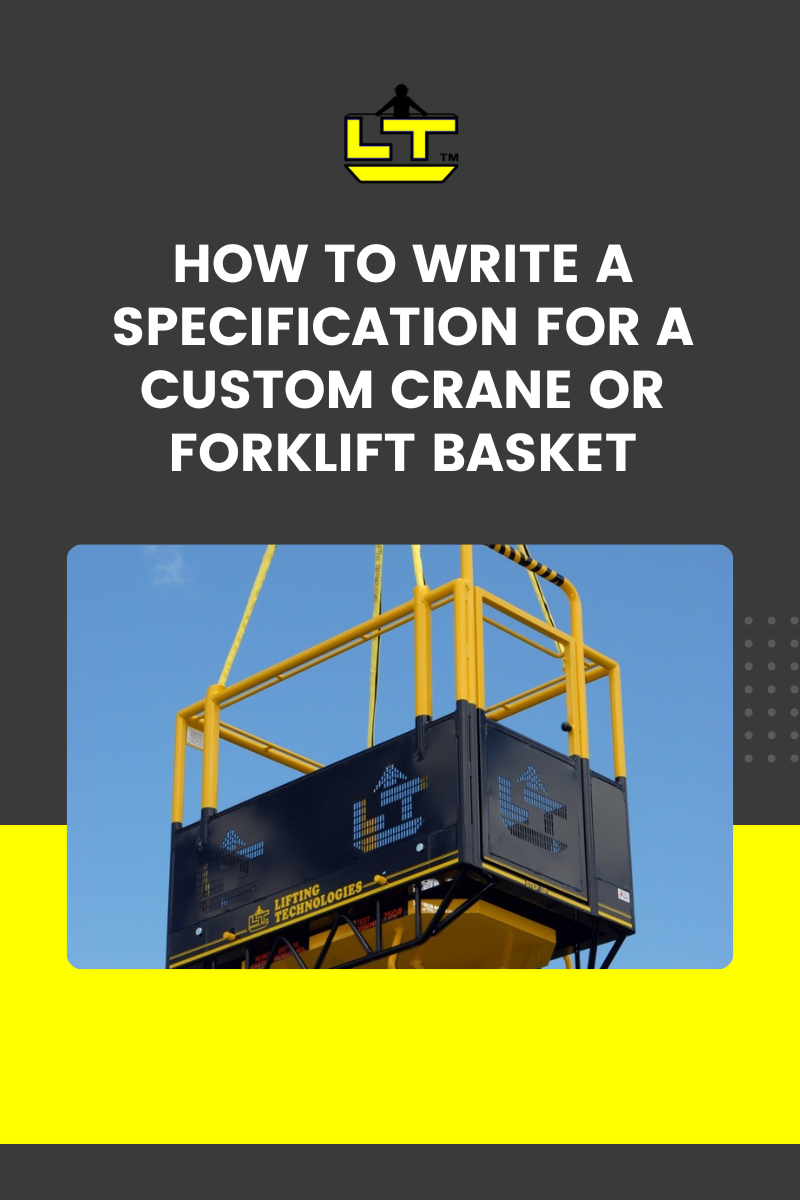
How to write a specification for a custom crane or forklift basket
By Lifting Technologies |
A vague RFQ produces a vague quote. When you ask for “a crane basket, roughly 4×4, for two people,” you’ll get a price, but the assumptions included in that price may not match your job. The crane hook geometry might be wrong. The floor might not handle your actual loads. The documentation might not satisfy […]
Read More 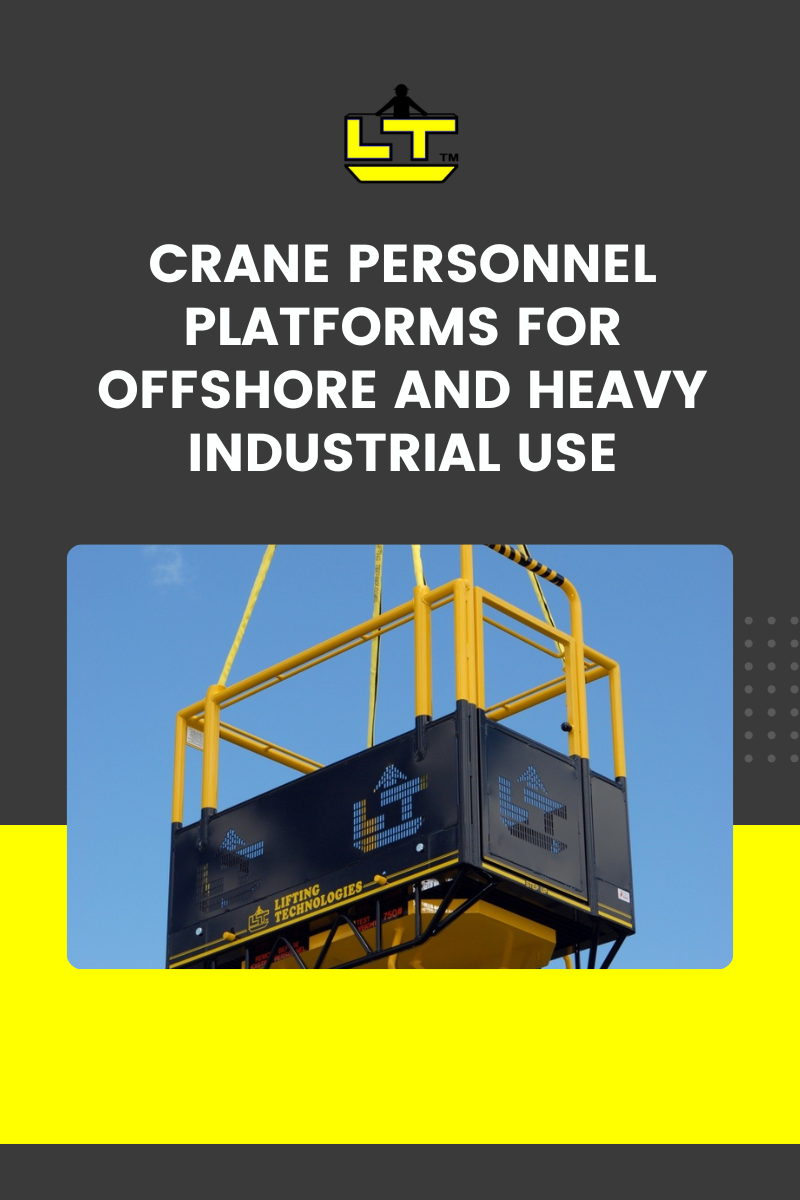
Crane personnel platforms for offshore and heavy industrial use
By Lifting Technologies |
A refinery column, an offshore platform deck, or a power plant boiler wall are not typical work environments. The equipment runs hot, the structures are congested, and safety is the highest priority. When aerial lifts can’t reach the work and scaffolding takes too long to erect, crane-suspended personnel platforms become the access tool of record. […]
Read More 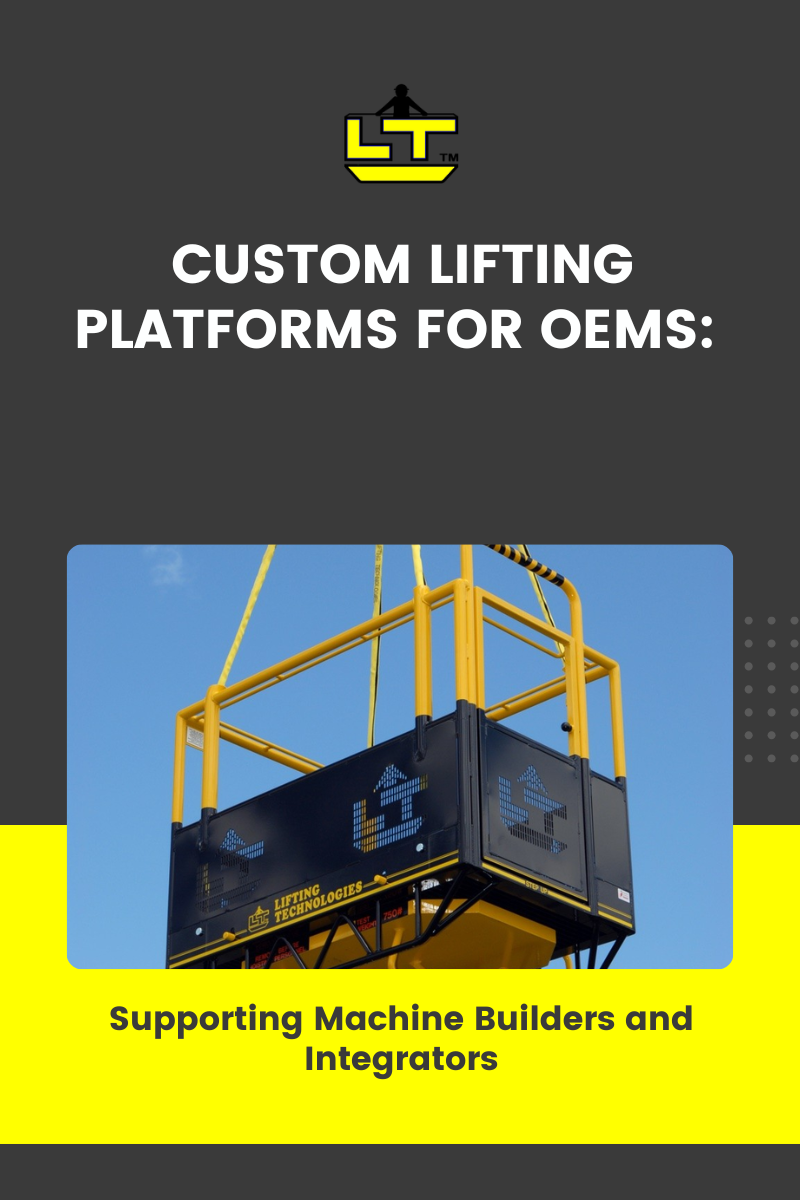
Custom lifting platforms for OEMs: Supporting machine builders and integrators
By Lifting Technologies |
Machine builders and system integrators rarely have a lifting problem that fits a catalog solution. The equipment being installed or serviced has specific dimensions, weight distributions, and handling requirements. The facility it’s going into has crane capacities, aisle widths, and height restrictions that were set long before the machine was specified. And the end customer’s […]
Read More 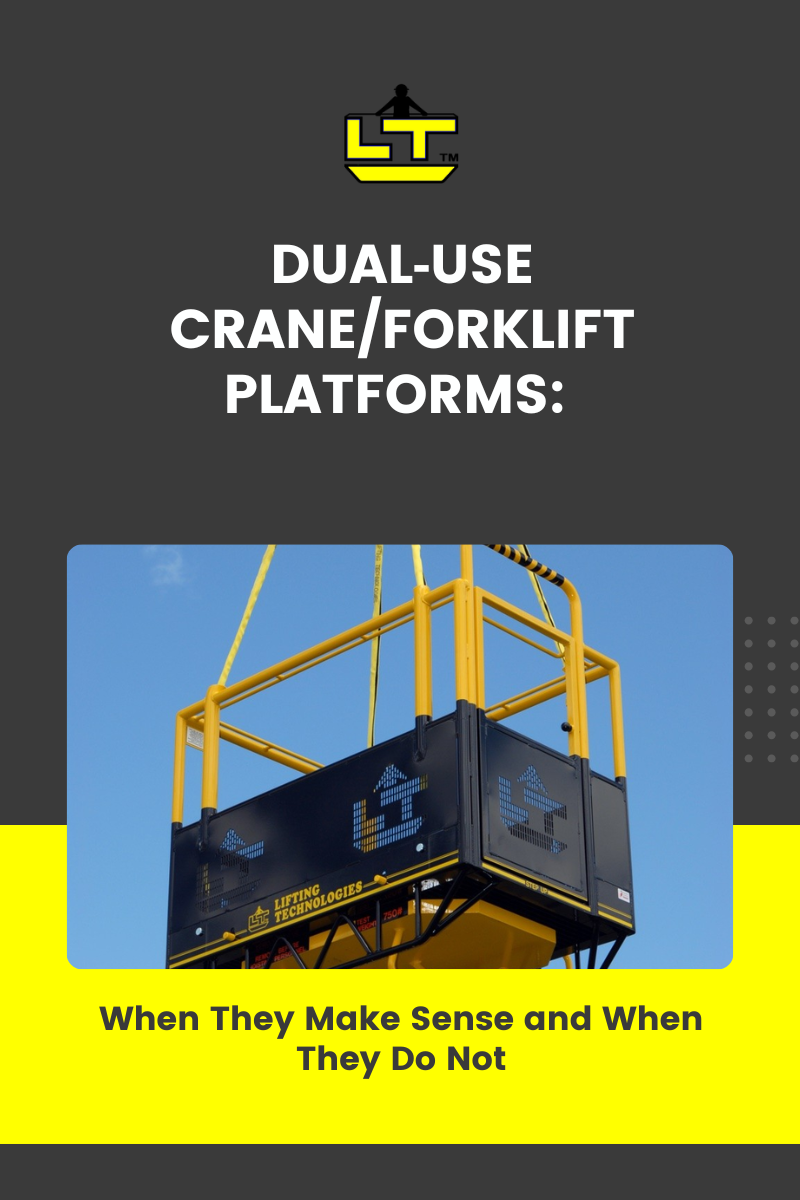
Dual‑use crane/forklift platforms: When they make sense and when they do not
By Lifting Technologies |
Cranes and forklifts often touch the same loads at different points in a job. A platform might come off a truck on forks, ride a crane to elevation, then get shuffled again by a lift truck at the end of the outage. In that world, the idea of one platform that handles both is tempting. […]
Read More 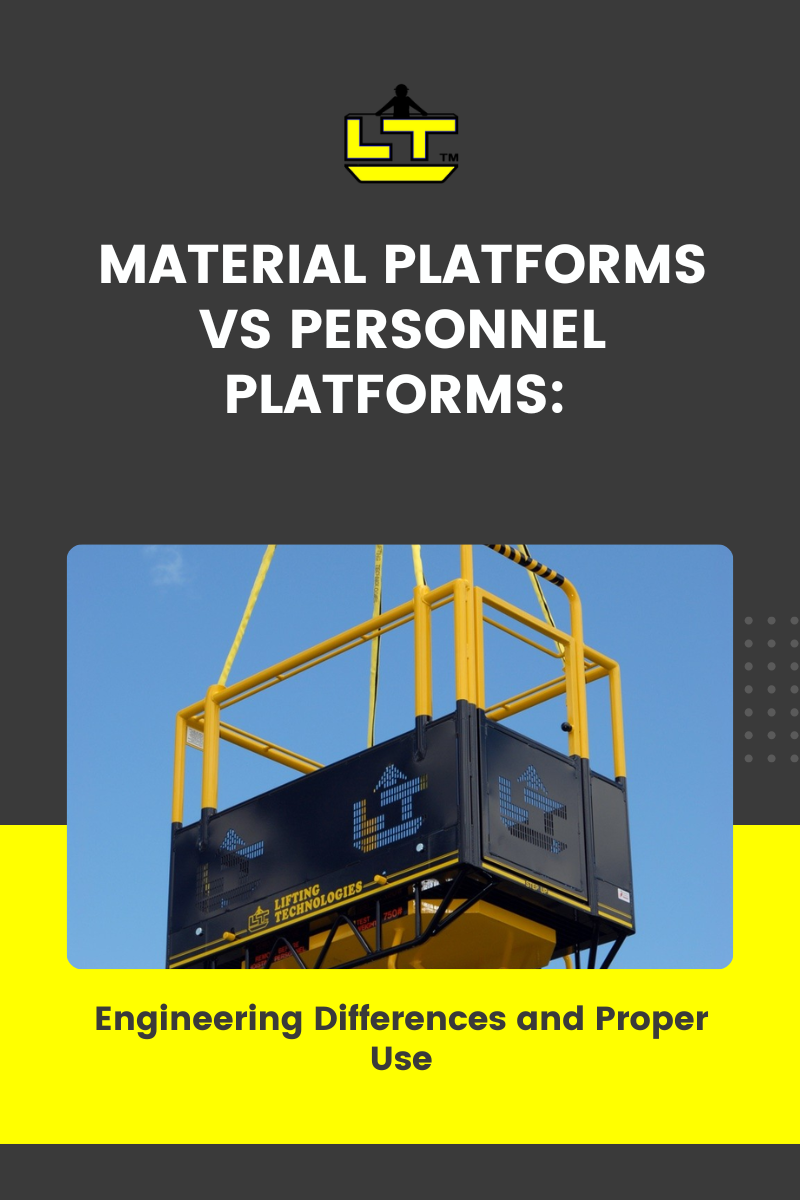
Material platforms vs personnel platforms: engineering differences and proper use
By Lifting Technologies |
From the ground, a crane material platform and a man basket can look like cousins. Both have steel frames, floors, sidewalls, and lifting points. On a busy site, that similarity leads to “just this once” decisions: riding in a material basket, or loading heavy freight into a personnel platform. Those shortcuts ignore how different these […]
Read More 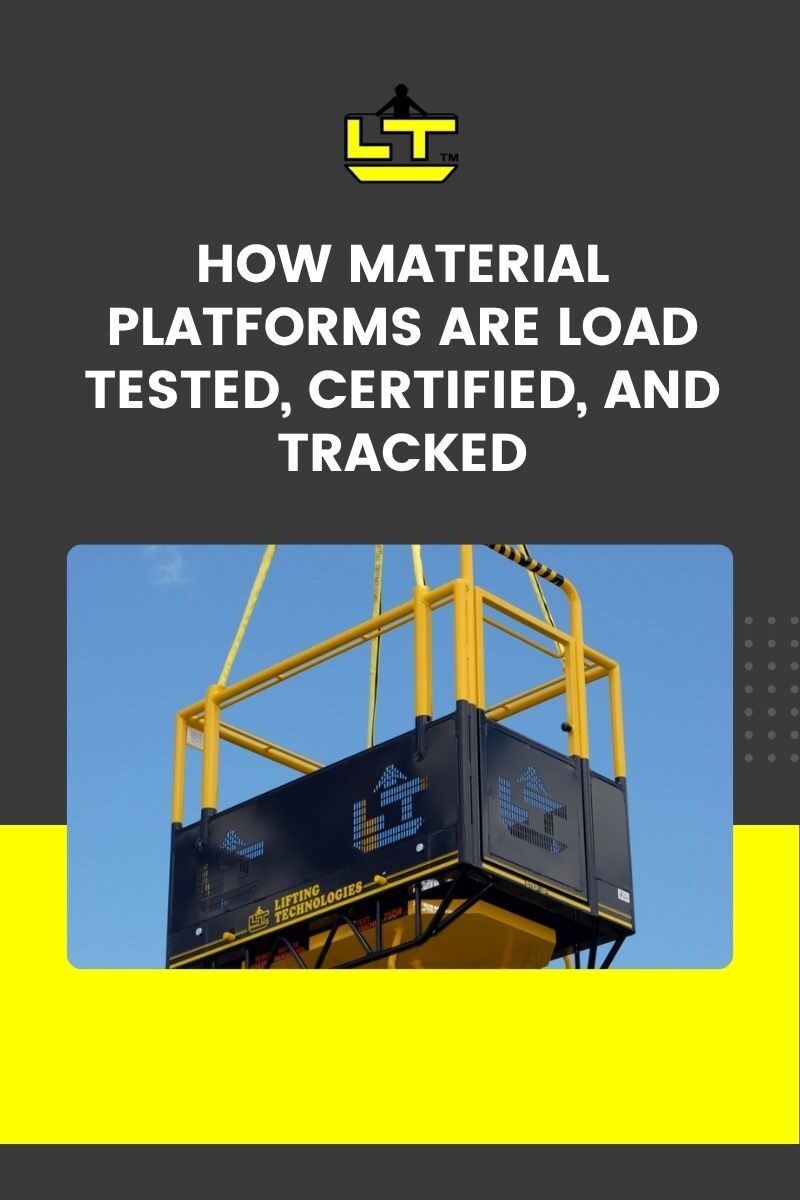
How material platforms are load tested, certified, and tracked
By Lifting Technologies |
Material lifting platforms move heavy, awkward loads every day and often hang over people and critical equipment. They just don’t get the same attention as man baskets, because no one rides inside. When a material platform fails, the first headline is “dropped load,” not “fall from height,” but the fallout can still be ugly: wrecked […]
Read More 
How crane personnel platforms are load tested, certified, and inspected
By Lifting Technologies |
Crane‑suspended personnel platforms sit at the sharp end of your lifting program. When they fail, people get hurt first and everything else comes second. Regulators know that, which is why man baskets attract far more scrutiny than material platforms or generic below‑the‑hook gear. From an engineering point of view, a man basket is a purpose‑designed […]
Read More 
Dynamic Forces on Material Platforms: Why “Freight Only” Still Needs Engineering
By Lifting Technologies |
Material platforms often live in a strange gray area of many lifting programs. Because no one rides in them, they are frequently treated as lower‑risk equipment—simple steel boxes for “freight only.” In reality, those same platforms routinely carry multi‑ton loads under crane and forklift motion, over congested work areas, and into elevated positions where a […]
Read More 
Shock Loading and Dynamic Forces in Suspended Personnel Platforms
By Lifting Technologies |
Static capacity numbers are comforting. They fit neatly on a nameplate and into a lift plan checkbox. Unfortunately, suspended personnel platforms almost never see purely static loads in real operating conditions. Every start, stop, swing, and slight misjudgment at the controls introduces dynamic forces that can multiply the effective load on the platform, rigging, and […]
Read More 
Designing Material Platforms to Support Safe Rescue and Shutdown Work
By Lifting Technologies |
Outages and shutdowns compress years of maintenance, upgrades, and inspections into a tight window where every lift, every delay, and every workaround shows up on the critical path. In that environment, material platforms are often treated as background equipment—generic baskets used to move “stuff” wherever the schedule demands. Yet those same platforms routinely carry high‑value […]
Read More 
Confined Space Rescue Using Crane Platforms: Engineering and Compliance Considerations
By Lifting Technologies |
Crane‑supported rescues sit at the intersection of your most hazardous work and your most tightly scrutinized procedures. Confined spaces already combine limited access, unpredictable atmospheres, and difficult ergonomics. Adding a crane‑suspended platform to that mix raises the stakes even further. When a rescue goes well, it looks controlled and straightforward. When it goes badly, investigators […]
Read More 
Common Material Platform Design Mistakes That Risk Loads and Schedules
By Lifting Technologies |
Material platforms occupy an interesting blind spot in many lifting programs. They are rarely treated with the same rigor as crane‑suspended personnel platforms, yet they routinely handle high‑value equipment, dense palletized loads, and components that are critical to outage and construction schedules. When a material platform fails, the most immediate consequences are damaged cargo and […]
Read More 
Common Design and Usage Mistakes That Lead to Crane Basket Failures
By Lifting Technologies |
Crane‑suspended personnel platforms sit at the intersection of below‑the‑hook lifting and life‑safety. When a crane man basket fails, it is almost never a freak event. It is usually the end result of design compromises, undocumented modifications, and operational shortcuts that have been accumulating over time. The engineering expectations for these platforms are not ambiguous. OSHA […]
Read More 
ASME B30.23 Explained for Personnel Lifting
By Lifting Technologies |
ASME B30.23 establishes the engineering and operational requirements for personnel lifting systems suspended from cranes and derricks. While OSHA 1926.1431 governs regulatory enforcement for personnel hoisting, ASME B30.23 defines the technical framework that informs structural design, load rating methodology, inspection criteria, and operational controls. For manufacturers and specifiers of crane-suspended personnel platforms, ASME B30.23 is […]
Read More 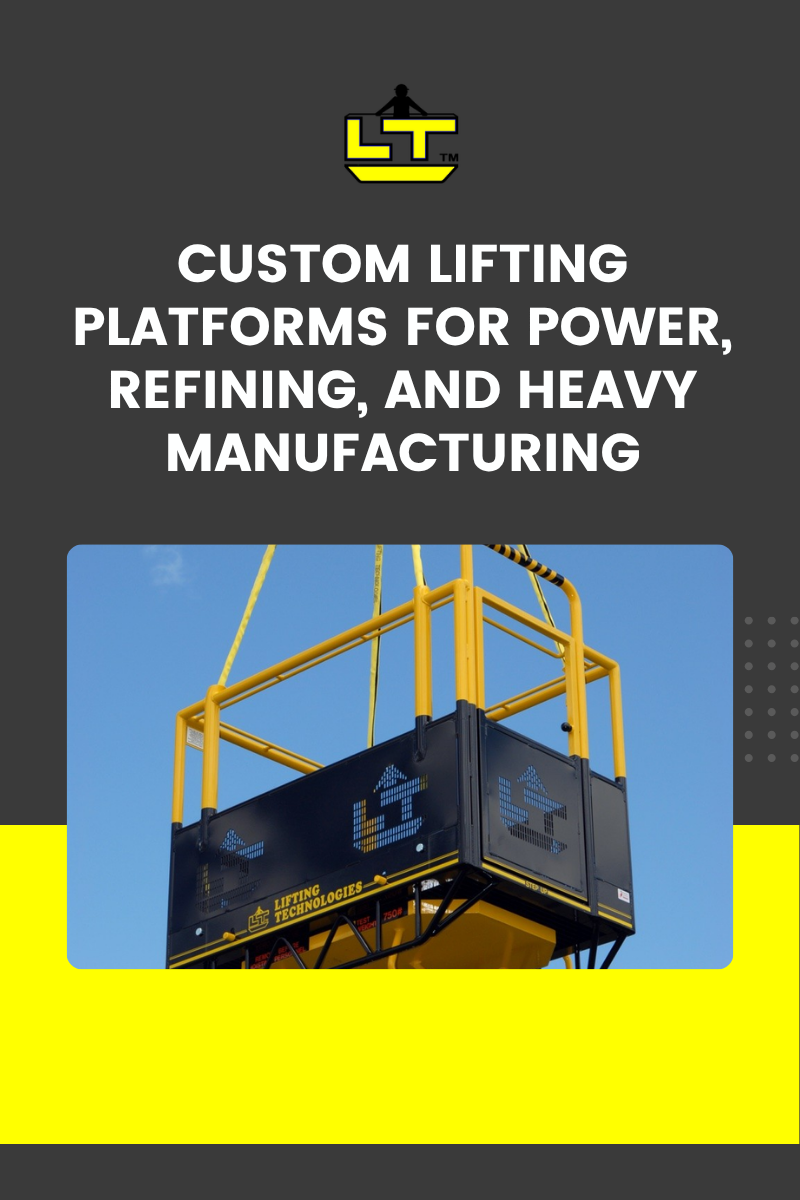
Custom Lifting Platforms for Power, Refining, and Heavy Manufacturing
By Lifting Technologies |
Standard man baskets and material platforms cover a lot of jobs—but not all of them. Power plants, refineries, offshore structures, and heavy manufacturing sites often face clearances, load cases, and safety requirements that catalog models simply cannot handle. Custom crane‑suspended lifting platforms fill that gap, giving engineers site‑specific solutions that still meet OSHA and internal […]
Read More 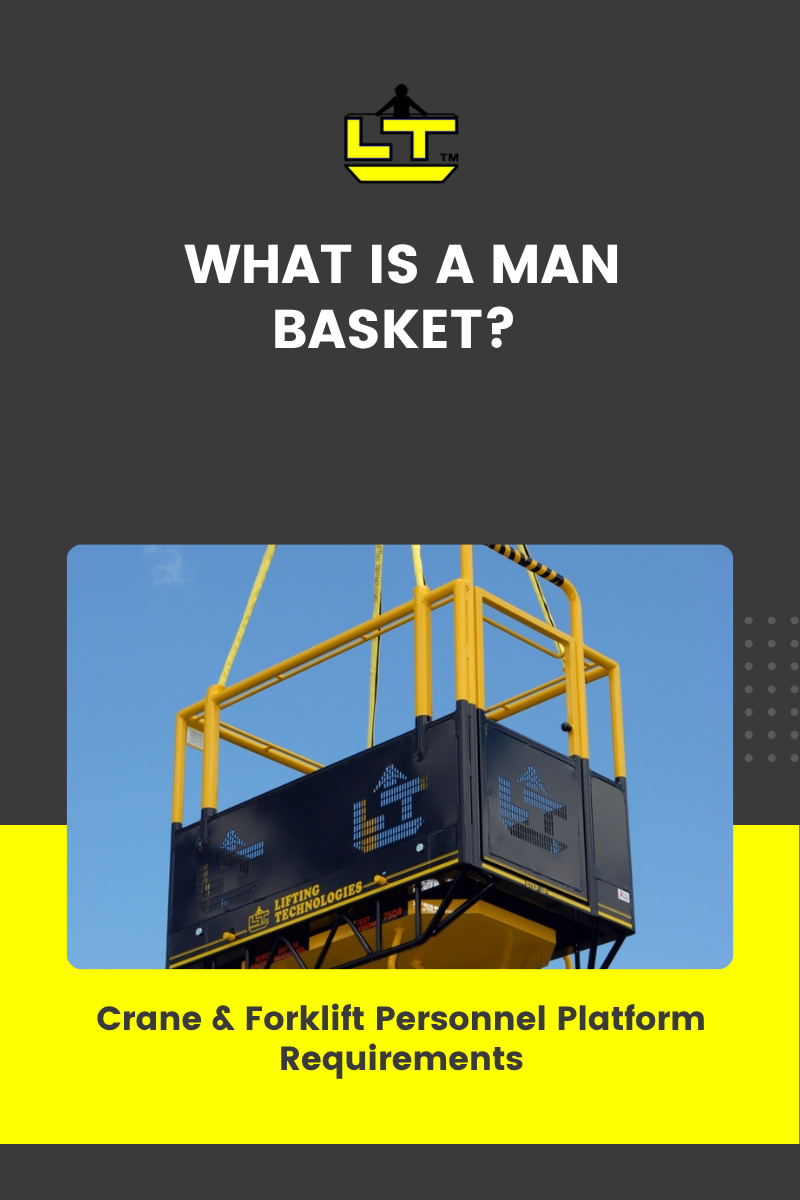
What Is a Man Basket? Engineering Standards, OSHA Rules, and Proper Use
By Lifting Technologies |
A man basket is a personnel lifting platform designed to elevate workers using either a crane or a forklift. Unlike material lifting cages, man baskets are engineered specifically for personnel hoisting. They incorporate structural reinforcement, fall protection systems, rated lifting interfaces, and regulatory compliance features required by OSHA and applicable industry standards. There are two […]
Read More 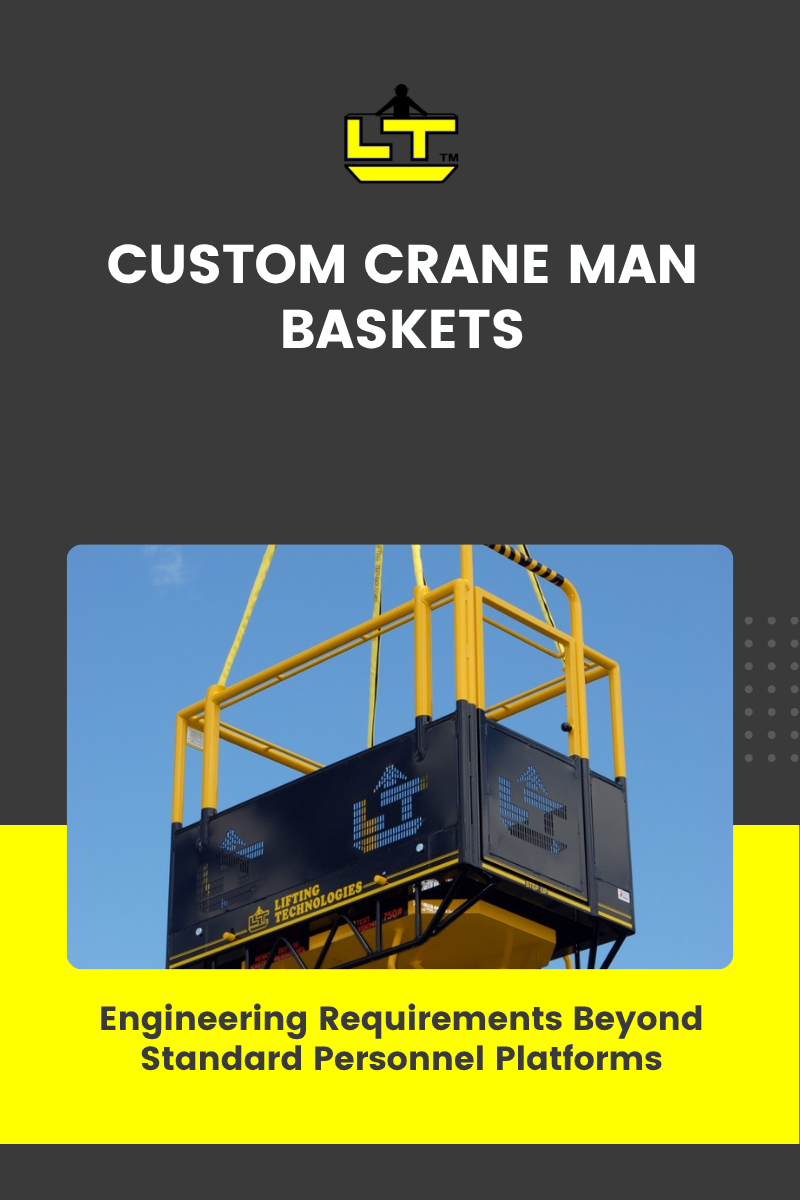
When Standard Man Baskets Are Not Enough: Engineering Custom Crane Personnel Platforms
By Lifting Technologies |
Standard crane personnel platforms are designed for predictable conditions: moderate occupancy, conventional crane geometry, and general industrial environments. Many field applications do not meet those assumptions. When lift radius increases, occupancy rises, geometry tightens, environmental exposure intensifies, or owner specifications exceed baseline OSHA requirements, the structural behavior of the platform changes. At that point, adapting […]
Read More 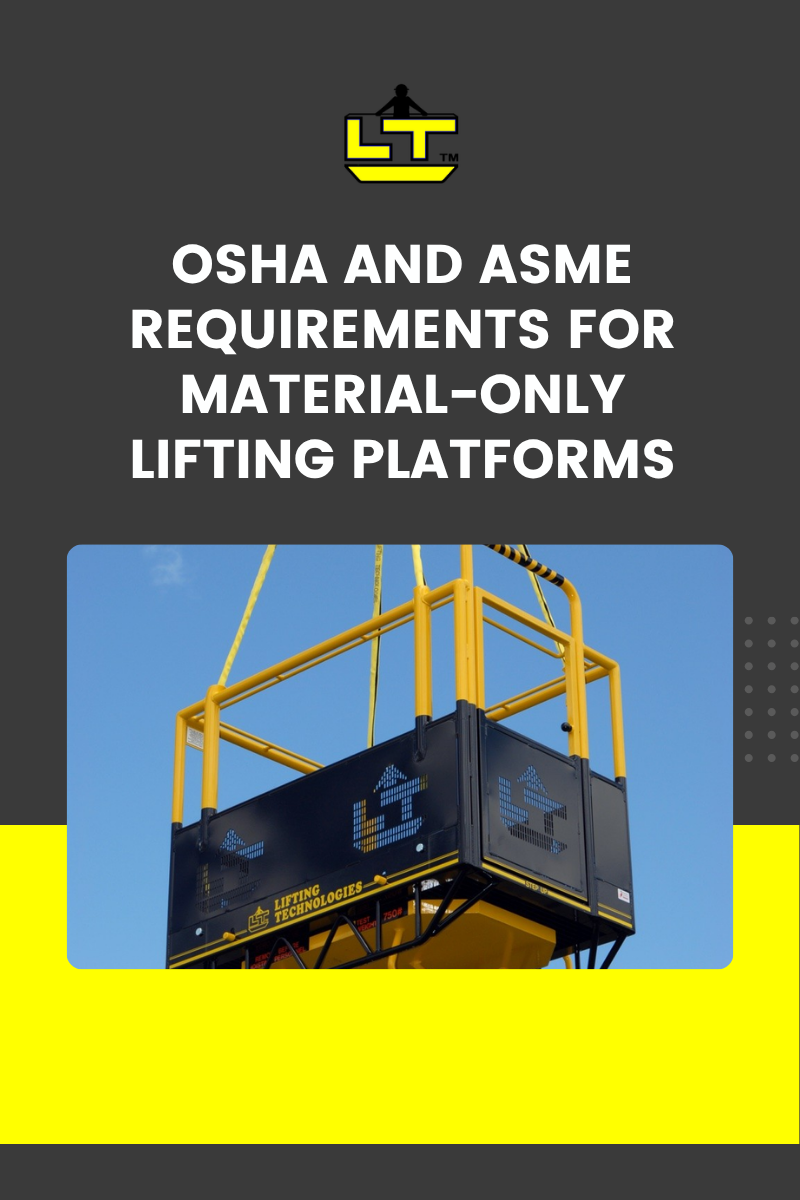
OSHA and ASME Requirements for Material-Only Lifting Platforms
By Lifting Technologies |
Material lifting platforms are often treated as simple accessories. In reality, they are engineered lifting devices that fall under multiple regulatory frameworks — especially when used with cranes or forklifts. Unlike crane personnel platforms governed by OSHA 1926.1431, material-only lifting platforms operate under a combination of: Understanding where these rules apply — and where they […]
Read More 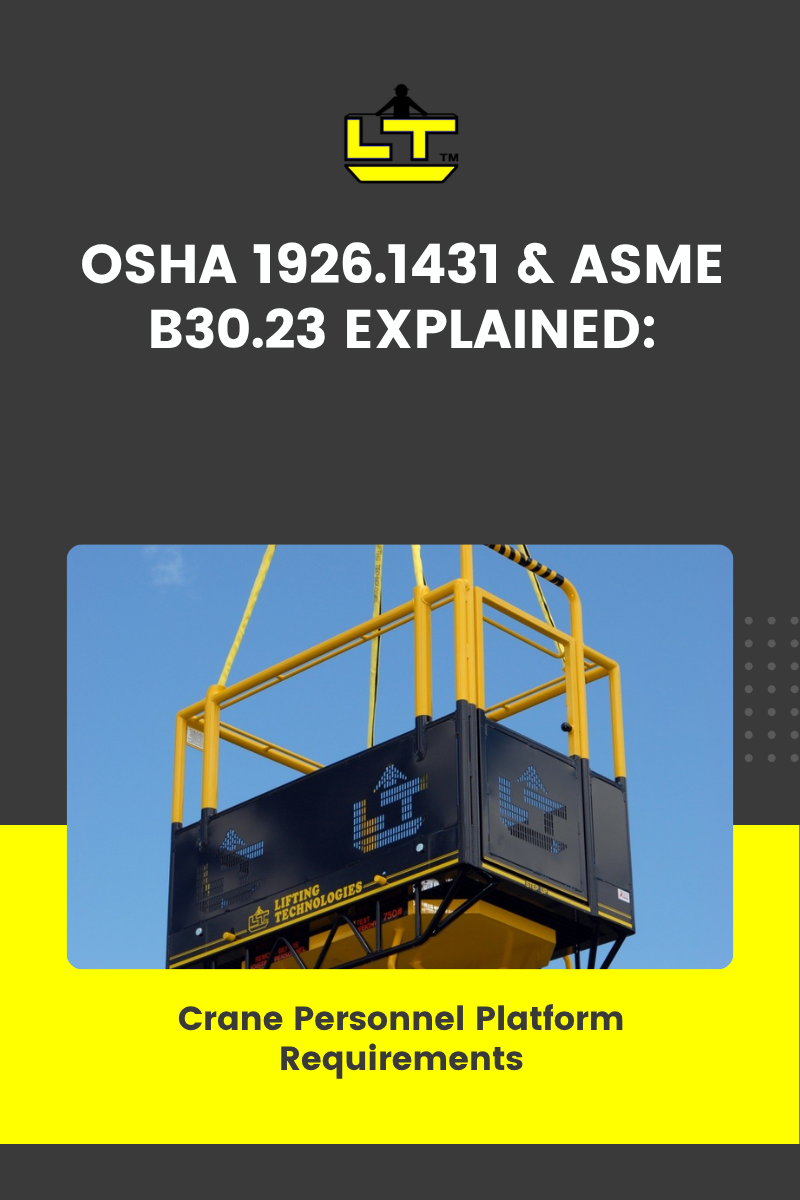
OSHA 1926.1431 & ASME B30.23 Explained: Crane Personnel Platform Requirements
By Lifting Technologies |
When a crane lifts personnel, the regulatory stakes change immediately. Unlike material lifting, hoisting workers in a crane personnel platform (man basket) is tightly regulated under OSHA 1926.1431 and informed by ASME B30.23. These standards exist because personnel lifting exposes workers to elevated fall risk, dynamic forces, and catastrophic failure potential if equipment is improperly […]
Read More 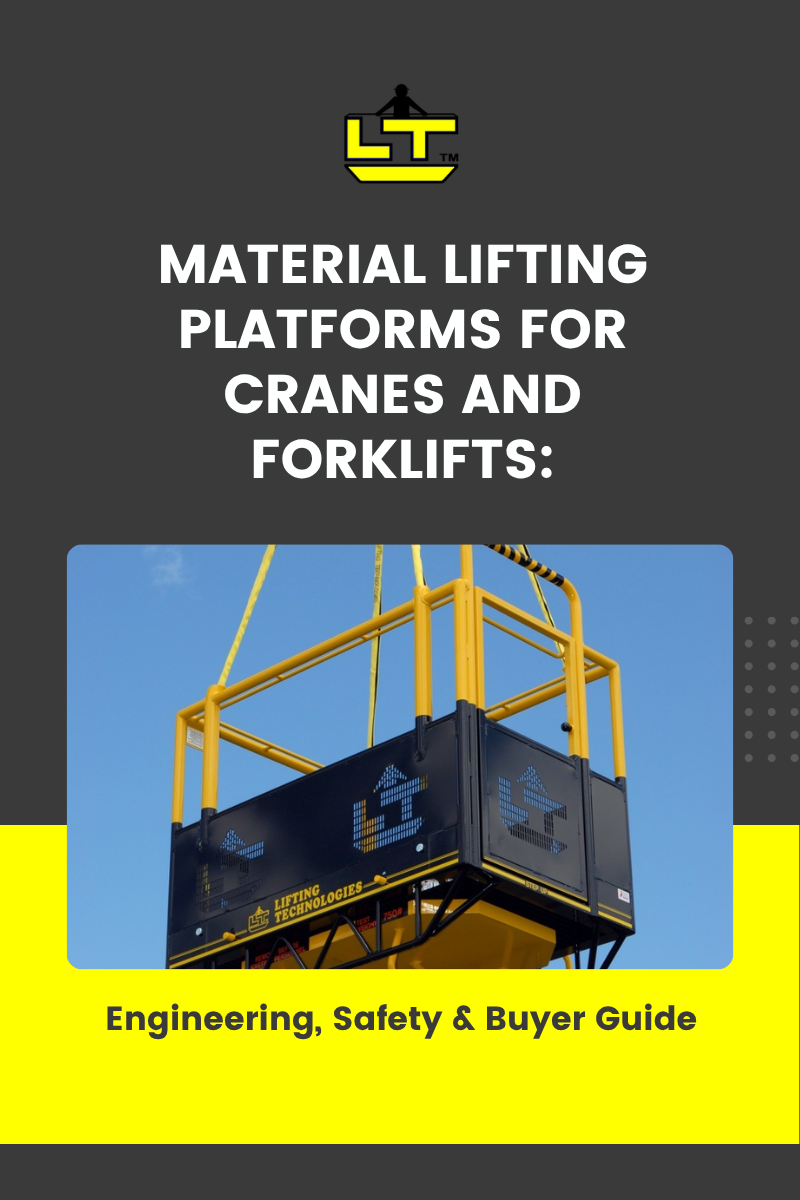
Material Lifting Platforms for Cranes and Forklifts: Engineering, Safety & How to Choose the Right One
By Lifting Technologies |
When you specify or approve a material lifting platform, you are not buying a cage. You are approving a structural lifting device that will operate under dynamic loads, real-world operator behavior, and regulatory oversight. Too often, “material cages” are treated as simple accessories. In reality, a crane material basket or dual use crane forklift platform […]
Read More 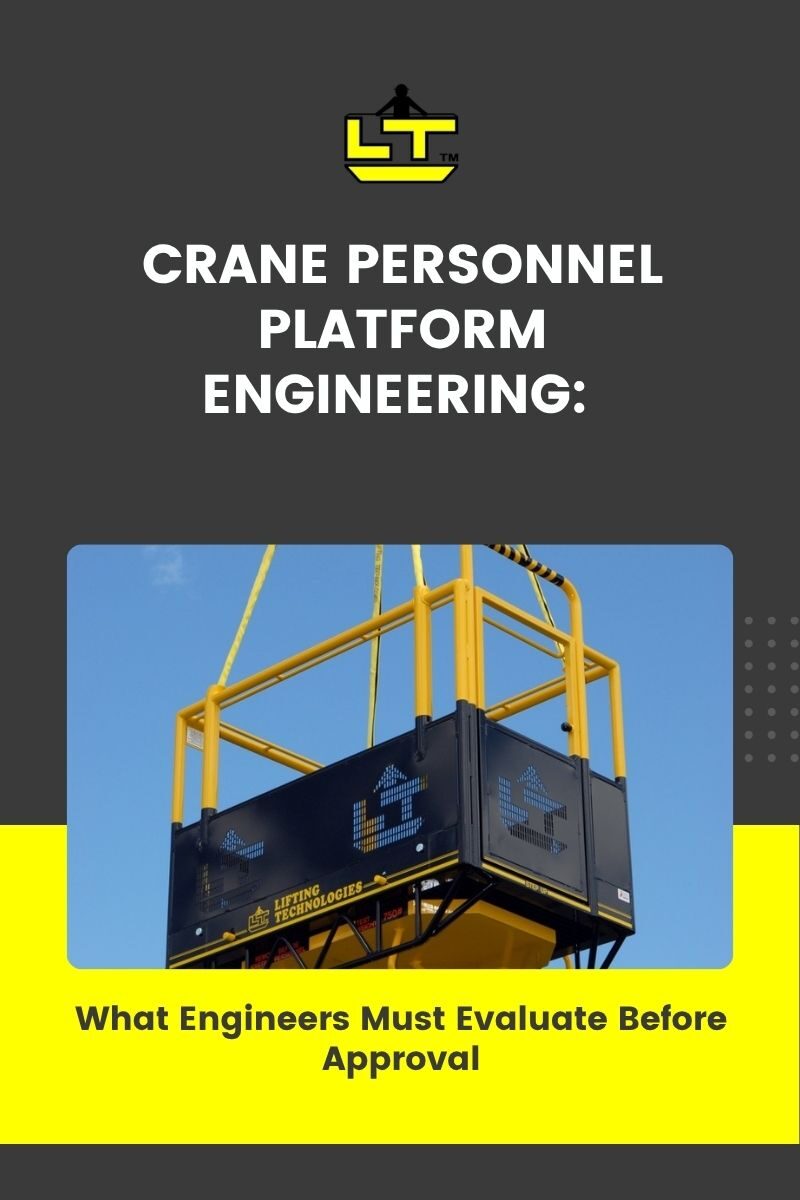
Crane Personnel Platform Engineering: What Engineers Must Evaluate Before Approval
By Lifting Technologies |
When you approve a crane-suspended man basket, you’re accepting responsibility for how that equipment behaves in the field—under dynamic loads, in tight clearances, and under OSHA scrutiny. Effective crane personnel platform engineering goes beyond a quick visual inspection; it requires a structured review of design, suspension and rigging, rated capacity, proof-load testing, and documentation against […]
Read More 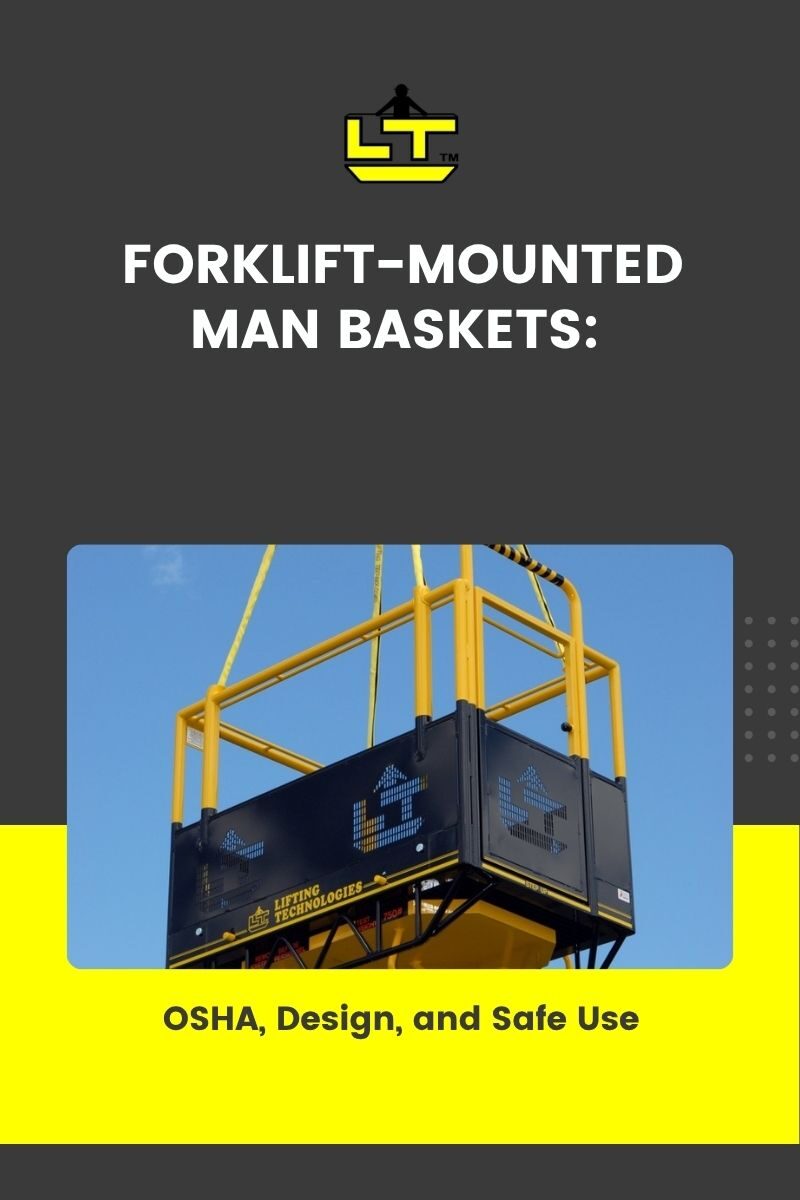
Forklift-Mounted Man Baskets: OSHA, Design, and Safe Use
By Lifting Technologies |
Key Highlights Introduction Working at height is a daily reality on many construction sites, in warehouses, and in industrial maintenance settings. Providing a secure and stable work platform is not just a matter of efficiency; it is a fundamental requirement for occupational safety. Forklift-mounted man baskets, also known as personnel baskets or work platforms, are […]
Read More 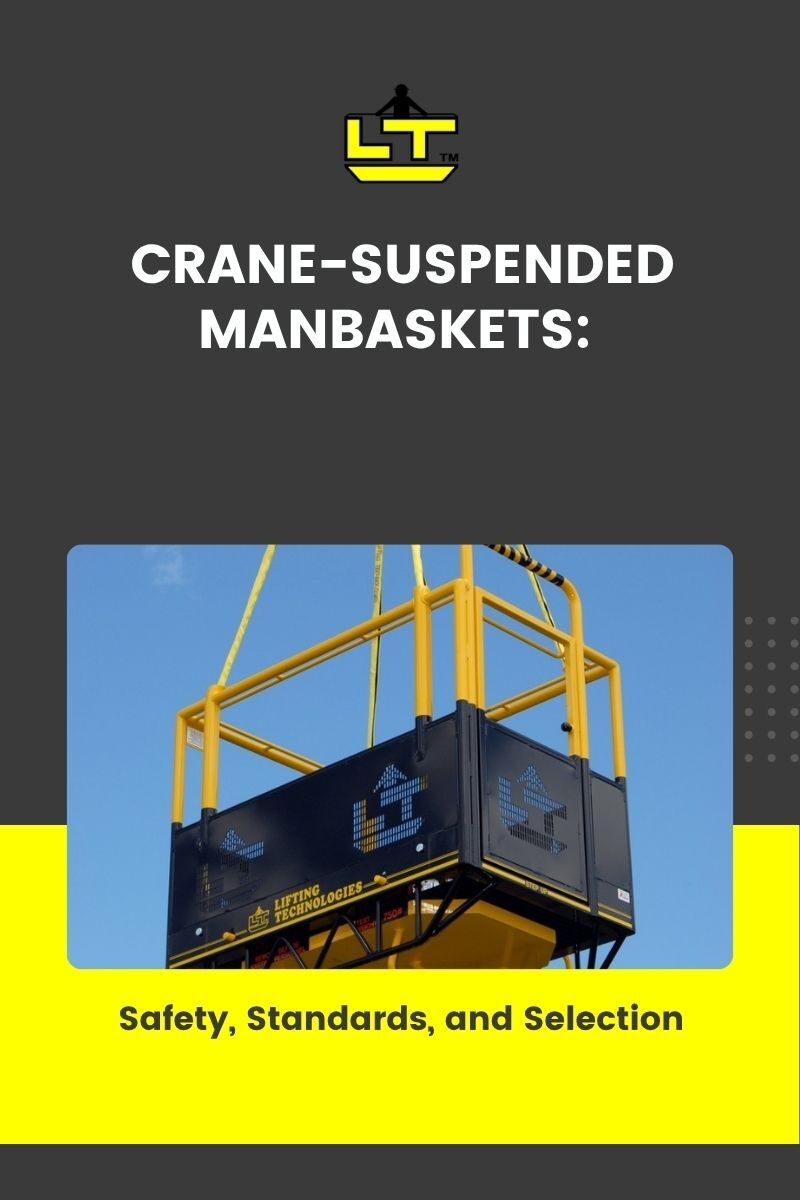
Crane-Suspended Manbaskets: Safety, Standards, and Selection
By Lifting Technologies |
Key Highlights Introduction Working at height is a daily reality on many construction sites and in industrial maintenance settings. Providing a secure and stable work platform is not just a matter of efficiency; it is a fundamental requirement for occupational safety. Crane-suspended manbaskets, also known as personnel baskets or personnel platforms, are specialized cages designed […]
Read More 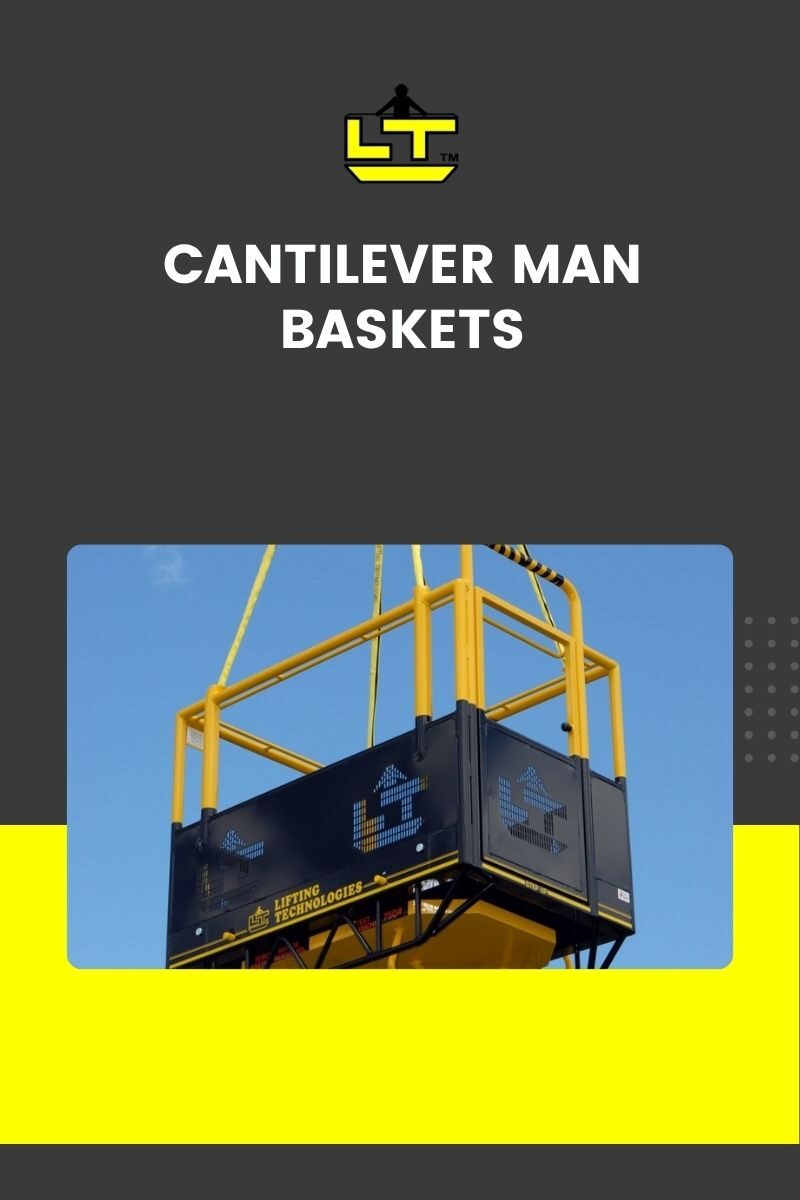
Cantilever Man Baskets
By Lifting Technologies |
What Is a Cantilever Man Basket? A cantilever man basket — also known as a cantilevered personnel hoisting platform — is a specialized work platform that extends outward from its suspension point, allowing workers safe access beyond edges, barriers, or obstructions. Typically suspended from a crane, it features an offset platform that “cantilevers” away from […]
Read More 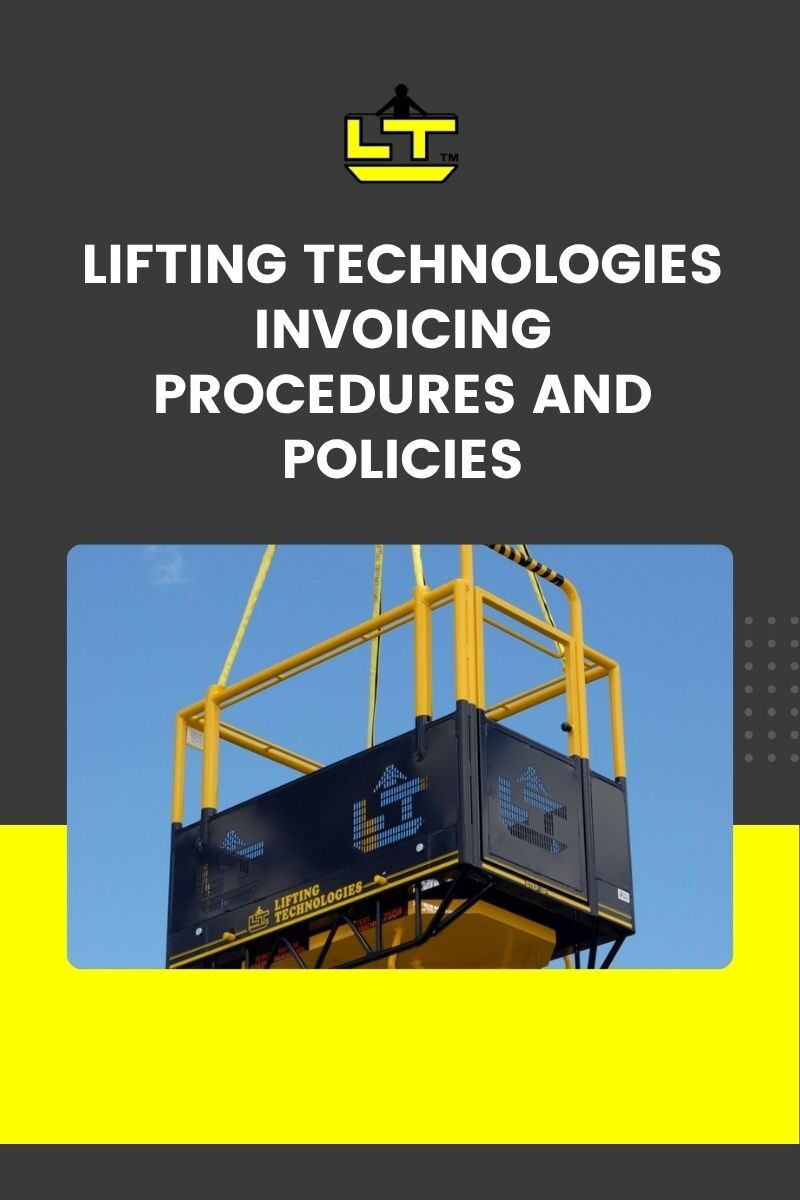
Lifting Technologies Invoicing Procedures and Policies
By Lifting Technologies |
At Lifttech, we strive to make the entire sales process as trouble-free as possible. This includes the invoicing and payment collection for your purchase. Our current invoicing procedure is as follows: All invoices are sent via email, unless a portal is required for invoicing. Many companies have separate email addresses for invoice remittance versus other communications, so […]
Read More 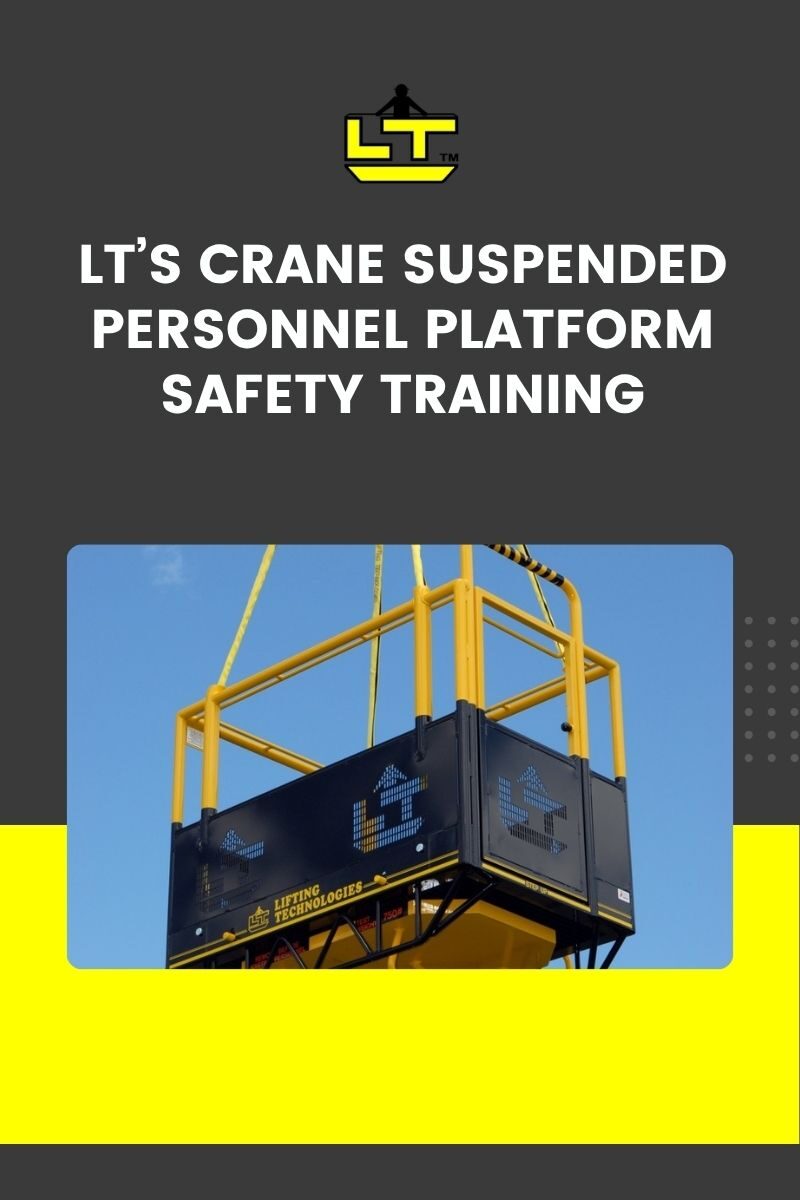
LT’s Crane Suspended Personnel Platform Safety Training
By Lifting Technologies |
Is your safety team on the cutting edge of workplace safety promotion? Is consistently presenting new safety training to maintain a well-trained and informed workforce part of your safety protocol? Partner with Lifting Technologies to provide your crane suspended personnel hoisting safety training! Lifting Technologies’ focus on safety goes far beyond our lifting platforms. Our […]
Read More 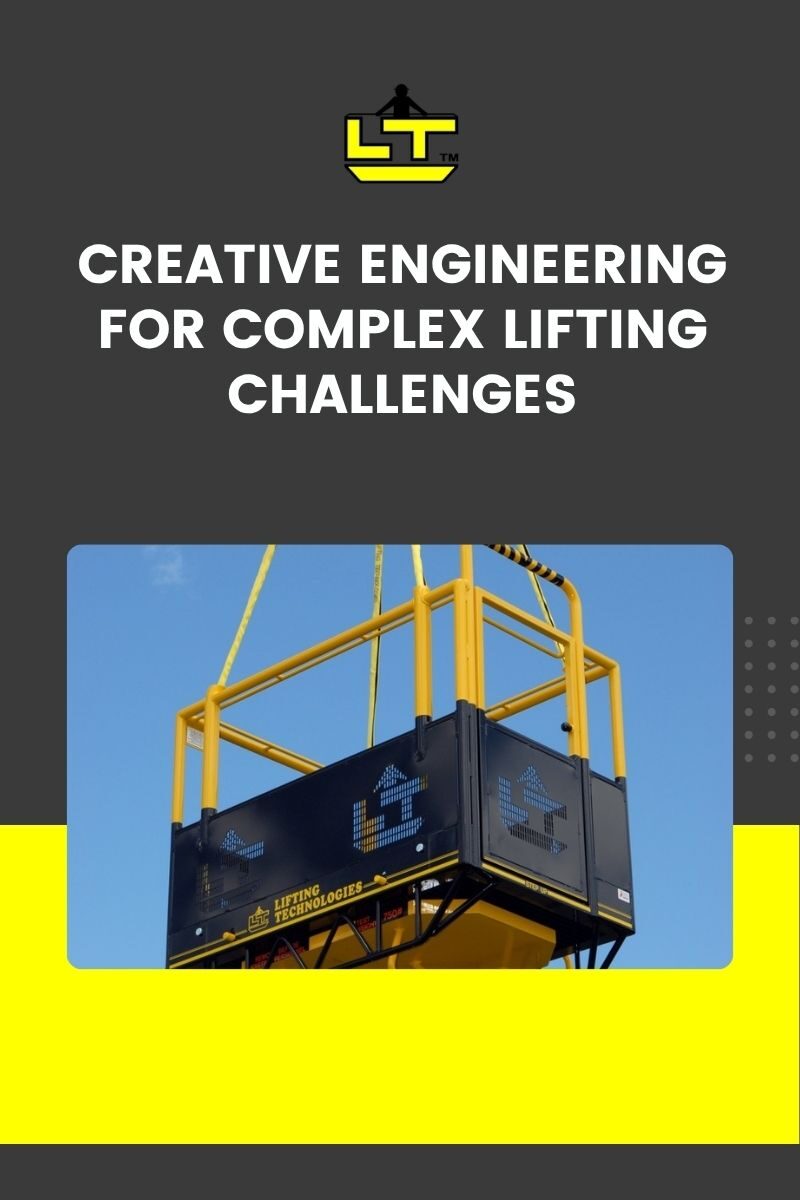
Creative Engineering for Complex Lifting Challenges
By Lifting Technologies |
When your project involves a critical lifting plan—especially one that demands hoisting personnel or materials using cranes or forklifts in unusually tight or high-risk conditions—you need more than standard equipment. You need engineering expertise, safety-focused design, and custom-built lifting platforms tailored to your exact needs. That’s where Lifting Technologies LLC excels. At Lifting Technologies, we […]
Read More 
LTL Freight: Avoiding Common Pitfalls and Extra Fees
By Lifting Technologies |
The freight industry has evolved significantly over the years. Advances in technology have streamlined processes, such as transitioning from handwritten bills of lading to digital documentation and online tracking. Shippers can now compare LTL freight rates from multiple carriers in one place, making the selection process more efficient. However, while some aspects of LTL shipping […]
Read More 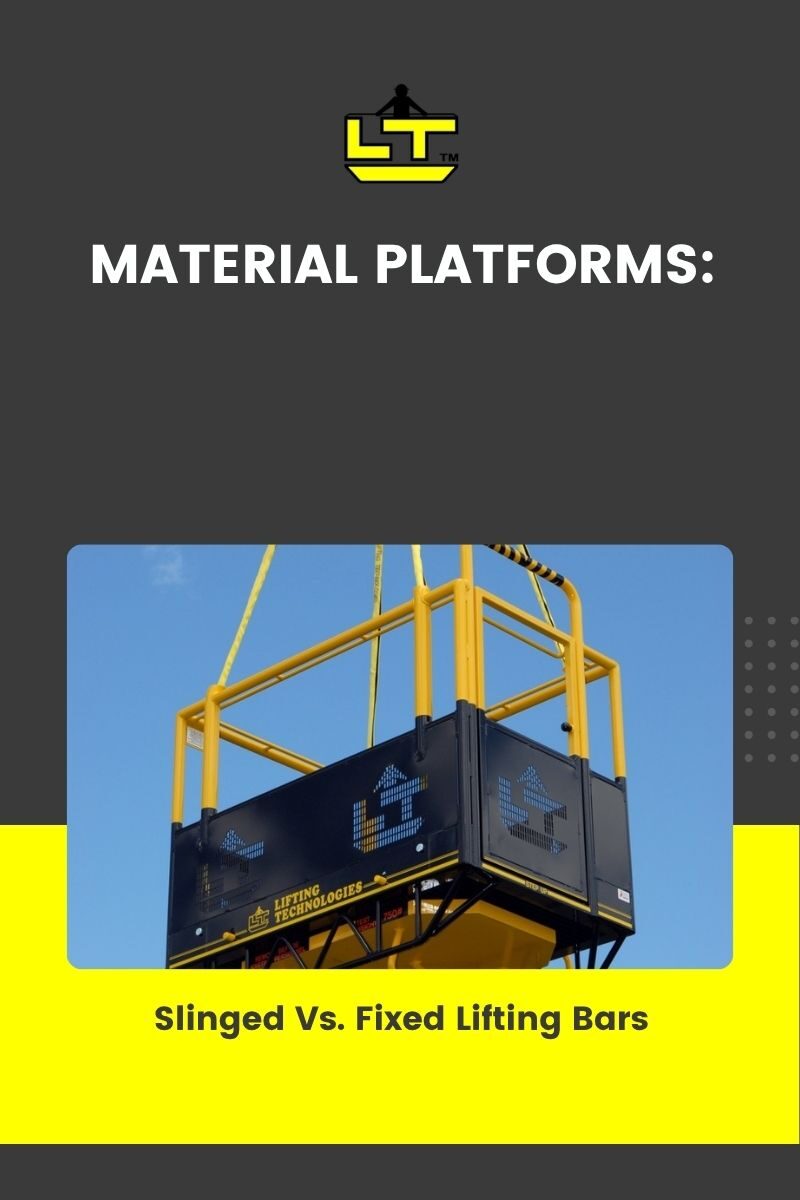
Material Platforms: Slinged Vs. Fixed Lifting Bars
By Lifting Technologies |
Selecting the appropriate suspension system for a material lifting platform is essential for achieving functionality, safety, and cost-efficiency. The two primary options are wire rope slings and fixed lifting bars. This guide provides an overview of the advantages and limitations of each system to help users make informed decisions based on their specific needs. Fixed […]
Read More 
The Importance of Proper Powder Coating Preparation
By Lifting Technologies |
Have you ever experienced equipment with a finish that failed prematurely, leaving you with a corroded surface and a safety risk for your lifting team? The likely culprit behind this issue is often inadequate preparation of the base material before powder coating. Why Is Powder Coating Preparation So Crucial? The preparation of the surface is […]
Read More